Castanea henryi
About
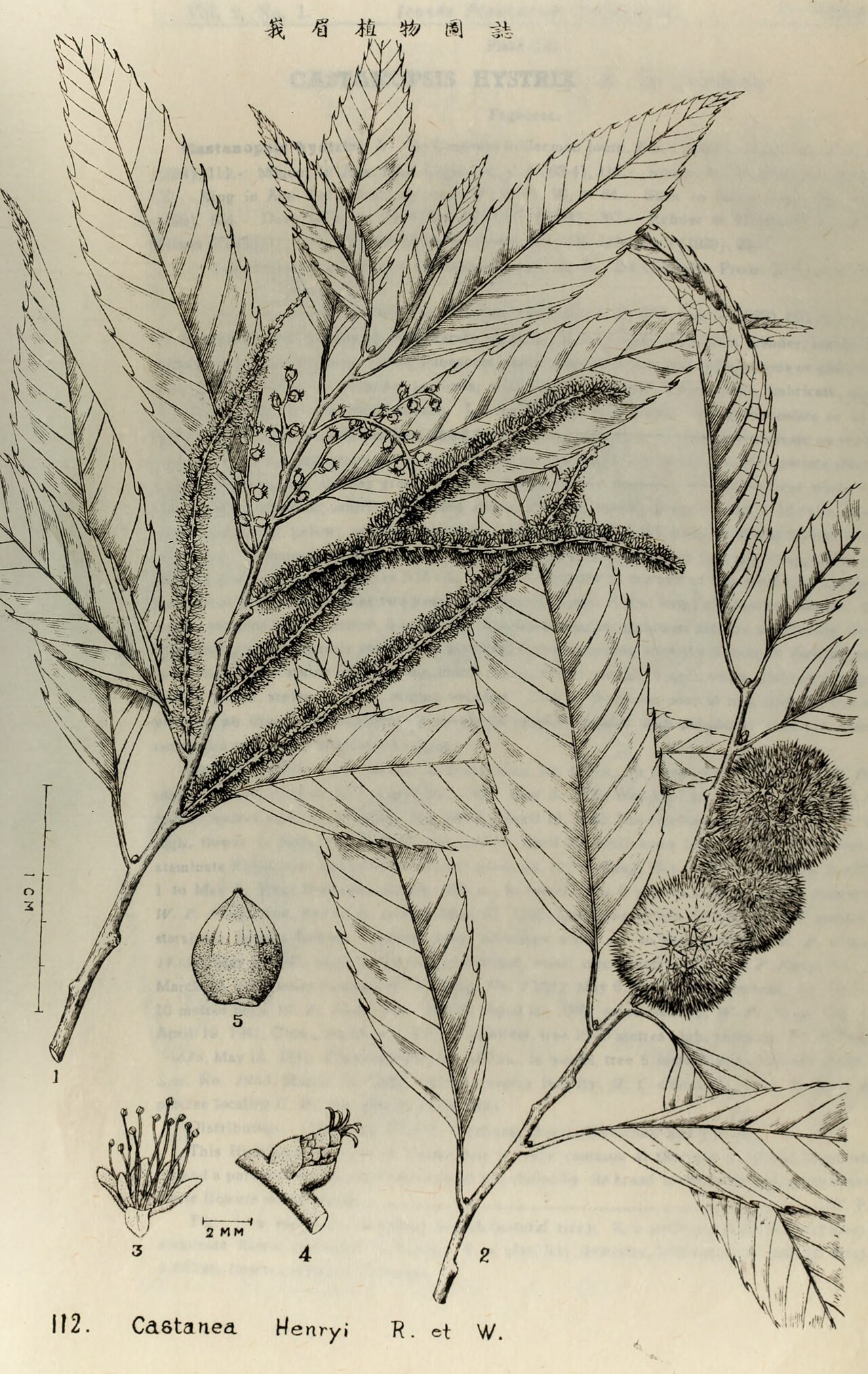
Castanea henryi, Henry chestnut, Henry's chestnut, or Chinese chinquapin, pearl chestnut, and in Chinese 錐栗, is a species of chestnut native to south-central and southeast China. A tree reaching 30 m, it is a source of good timber, but has smaller nuts than its size might suggest. Like its close relative Castanea mollissima, it is widely cultivated in China, and quite a few varieties have been developed in recent times.
- Family
- Fagaceae
How to use it
The Henry chestnut is valued for its timber, making it an important resource in construction and woodworking. Additionally, its cultivation has led to the development of various varieties, which can enhance biodiversity in gardens and landscapes. This tree's ecological role is significant, contributing to forest health and providing habitat for wildlife.
Sources: en.wikipedia.org
Ecology
How it lives
- Propagated by
- Seed
Full detailsevery field on the record, to copy
- Name
- Castanea henryi
- Slug
- castanea-henryi
- Kingdom
- Plantae
- Family
- Fagaceae
- Genus
- Castanea
- Species
- henryi
- Wikidata QID
- Q577422
- Propagule type
- seed
- Container suitable
- No
- Indoor suitable
- No
- OSSI pledged
- No
- Hazard level
- 1
- Data completeness
- 43
Generated sections & citations
summarywikipedia
fun_facts_kidsllm_openai · confidence 0.80
- wikipedia (description.summary) — https://en.wikipedia.org/wiki/Castanea_henryi
fun_facts_adultllm_openai · confidence 0.80
- wikipedia (description.summary) — https://en.wikipedia.org/wiki/Castanea_henryi
how_to_usellm_openai · confidence 0.80
- wikipedia (description.summary) — https://en.wikipedia.org/wiki/Castanea_henryi