Castanea crenata
About
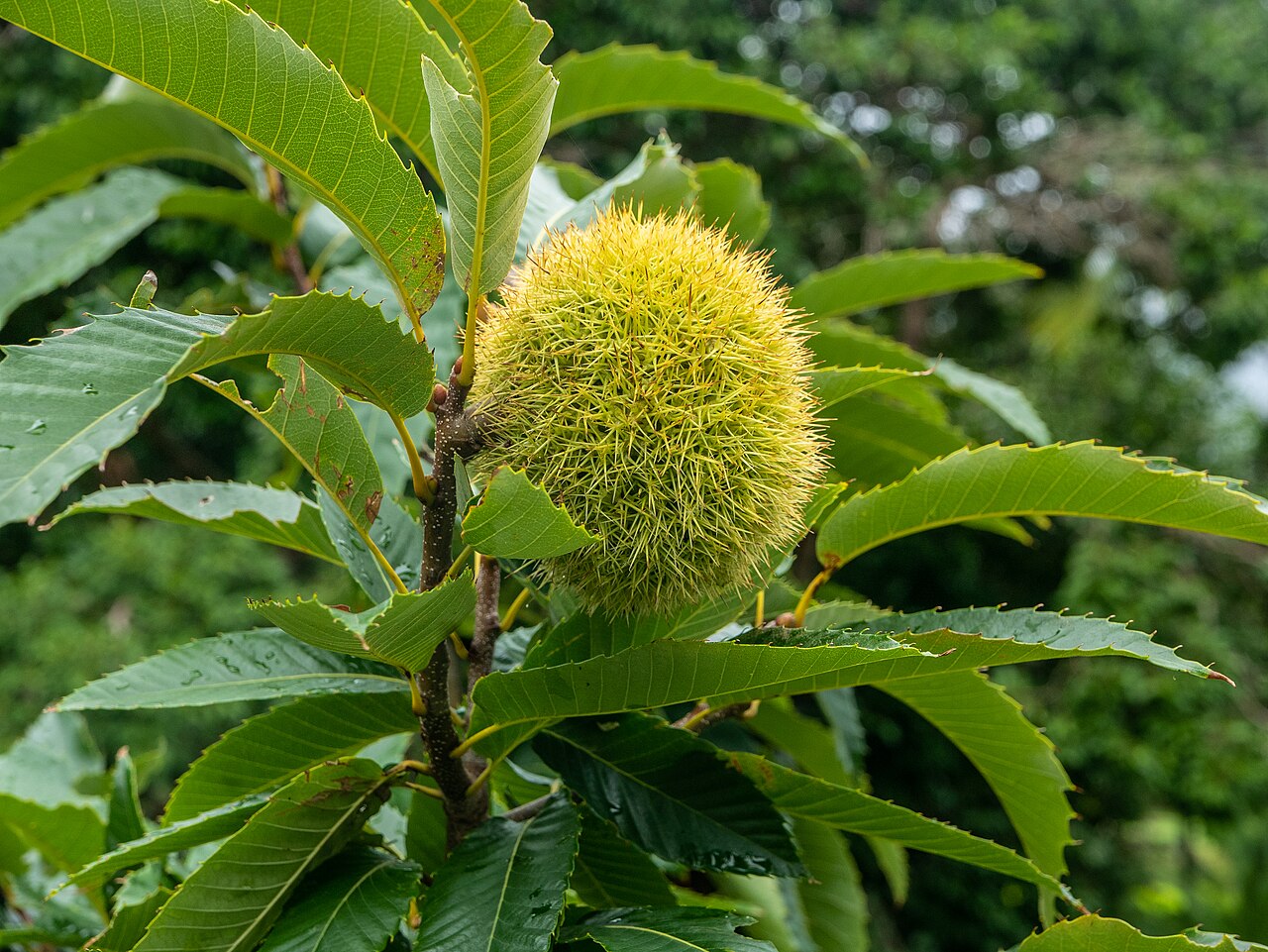
Castanea crenata, the Japanese chestnut or Korean chestnut, is a species of chestnut native to Japan and Korea. Castanea crenata exhibits resistance to Phytophthora cinnamomi, the fungal pathogen that causes ink disease in several Castanea species. The mechanism of resistance of Castanea crenata to Phytophthora cinnamomi may derive from its expression of the Cast_Gnk2-like gene.
- Family
- Fagaceae
How to use it
The Japanese chestnut is valued not only for its nuts but also for its resistance to certain diseases, making it an excellent choice for sustainable forestry and agriculture. Its ability to withstand fungal infections can help maintain healthy ecosystems where other chestnut species might struggle.
Sources: en.wikipedia.org
Ecology
How it lives
- Propagated by
- Seed
Full detailsevery field on the record, to copy
- Name
- Castanea crenata
- Slug
- castanea-crenata
- Kingdom
- Plantae
- Family
- Fagaceae
- Genus
- Castanea
- Species
- crenata
- Wikidata QID
- Q717827
- Propagule type
- seed
- Container suitable
- No
- Indoor suitable
- No
- OSSI pledged
- No
- Hazard level
- 1
- Data completeness
- 43
Generated sections & citations
summarywikipedia
fun_facts_kidsllm_openai · confidence 0.80
- wikipedia (description.summary) — https://en.wikipedia.org/wiki/Castanea_crenata
fun_facts_adultllm_openai · confidence 0.80
- wikipedia (description.summary) — https://en.wikipedia.org/wiki/Castanea_crenata
how_to_usellm_openai · confidence 0.80
- wikipedia (description.summary) — https://en.wikipedia.org/wiki/Castanea_crenata