Ceratocystis fagacearum
FungiFamily: Ceratocystidaceae · Genus: Ceratocystis
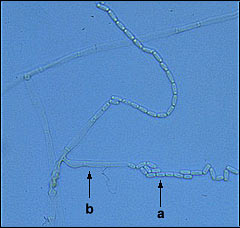
All Photo credits from publication: Steve Cook, Cook Company, St. Paul, MN Sandra Gould, U of MN, Plant Disease Clinic Rich Hauer, MN Department of Agriculture, Photo Archive Jill Pokorny, USDA Forest Service, St. Paul, MN Stephen Stenger, Kunde Co., Roseville, MN · public_domain
About
Oak wilt is a fungal disease caused by the organism Bretziella fagacearum that threatens Quercus spp. The disease is limited to the eastern half of the United States, Central Texas, and Southern Ontario. First described in the 1940s in the Upper Mississippi River Valley, the pathogen penetrates xylem tissue, preventing water transport and causing disease symptoms. Symptoms generally consist of leaf discoloration, wilt, defoliation, and death. The disease is dispersed by insect vectors and to adjacent trees through underground root networks. However, human spread is the most consequential dispersal method. Moving firewood long distances can potentially transport diseases and invasive species.
Summary from Wikipedia
View full profile
Growing details and traits for Ceratocystis fagacearum in the Library.
No cultivars in the Library yet — the full profile above covers the species itself.