2LearnKept species
Western honey bee
Apis mellifera
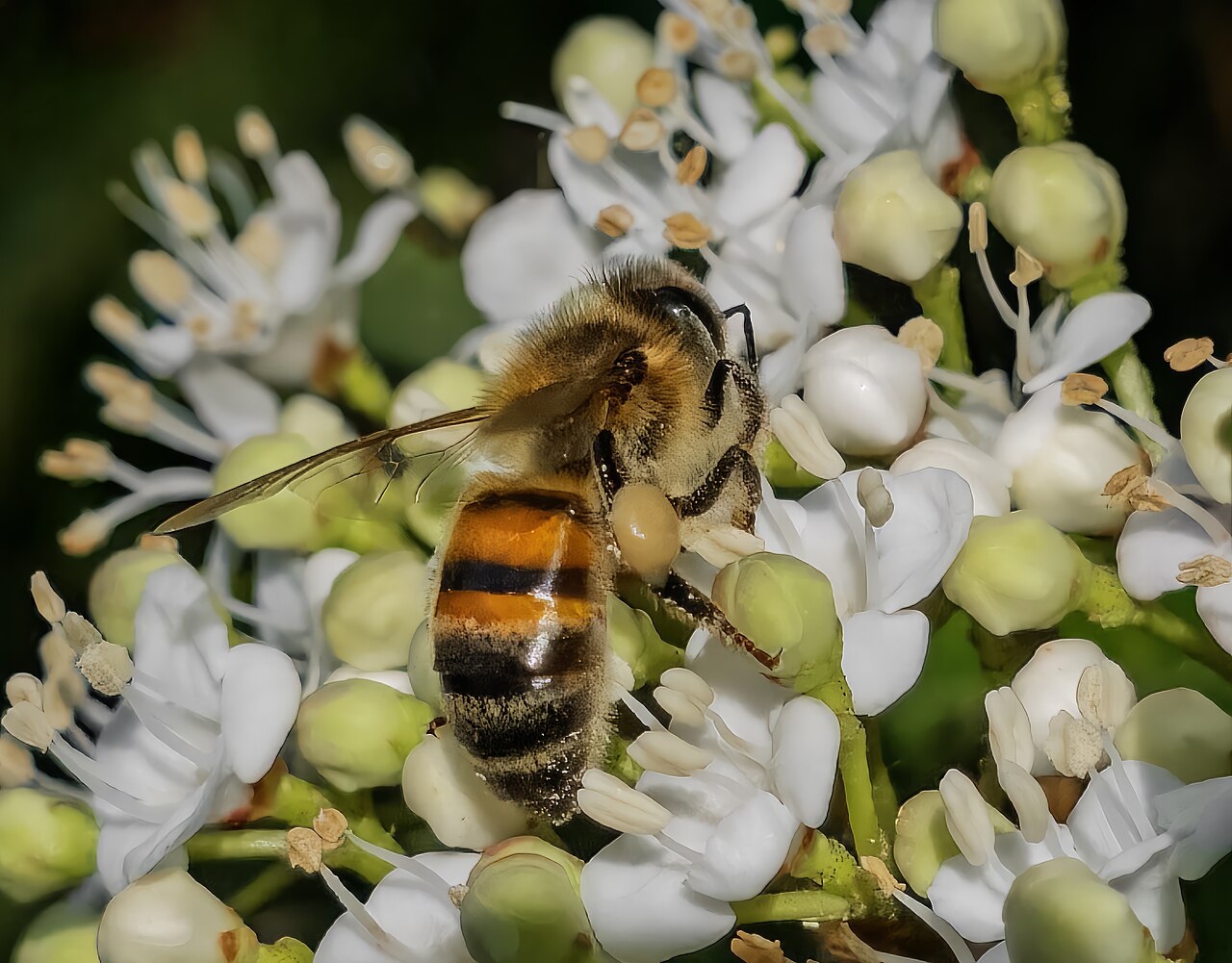
The western honey bee is the main managed bee, kept for honey and beeswax and as a pollinator of crops. A colony is a single family of one queen, thousands of workers and, in summer, drones. Beekeepers house colonies in hives that let them inspect and manage the combs.
About
Species of insect.
- Family
- Apidae
Keeping
How it is kept
Kept for
- Pollination
- Temperament
- Varies by strain; most colonies are calm when handled gently
- Forage
- Forage nectar and pollen from flowers within a few kilometres of the hive. Colonies may need feeding with sugar syrup in autumn or when little is flowering.
- Housing
- A standard hive in a sheltered, sunny spot with a clear flight path away from neighbours and footpaths. Provide a nearby source of water.
- Good to know
- Inspect colonies regularly through the active season to check the queen is laying and to spot preparations to swarm. Varroa mites need monitoring and control every year. Many places ask beekeepers to register their apiaries, and a local beekeeping association is the best place to start.
Photos, videos and notes
From keepers
Known as
Names around the world
- en
- honey bee, western honey bee, European honey bee
Full detailsevery field on the record, to copy
- Name
- Western honey bee
- Slug
- western-honey-bee
- Kingdom
- Animalia
- Family
- Apidae
- Genus
- Apis
- Species
- mellifera
- Wikidata QID
- Q30034
- Container suitable
- No
- Indoor suitable
- No
- OSSI pledged
- No
- Hazard level
- 1
- Data completeness
- 48
Generated sections & citations
summarywikidata