Hibiscus acetosella
About
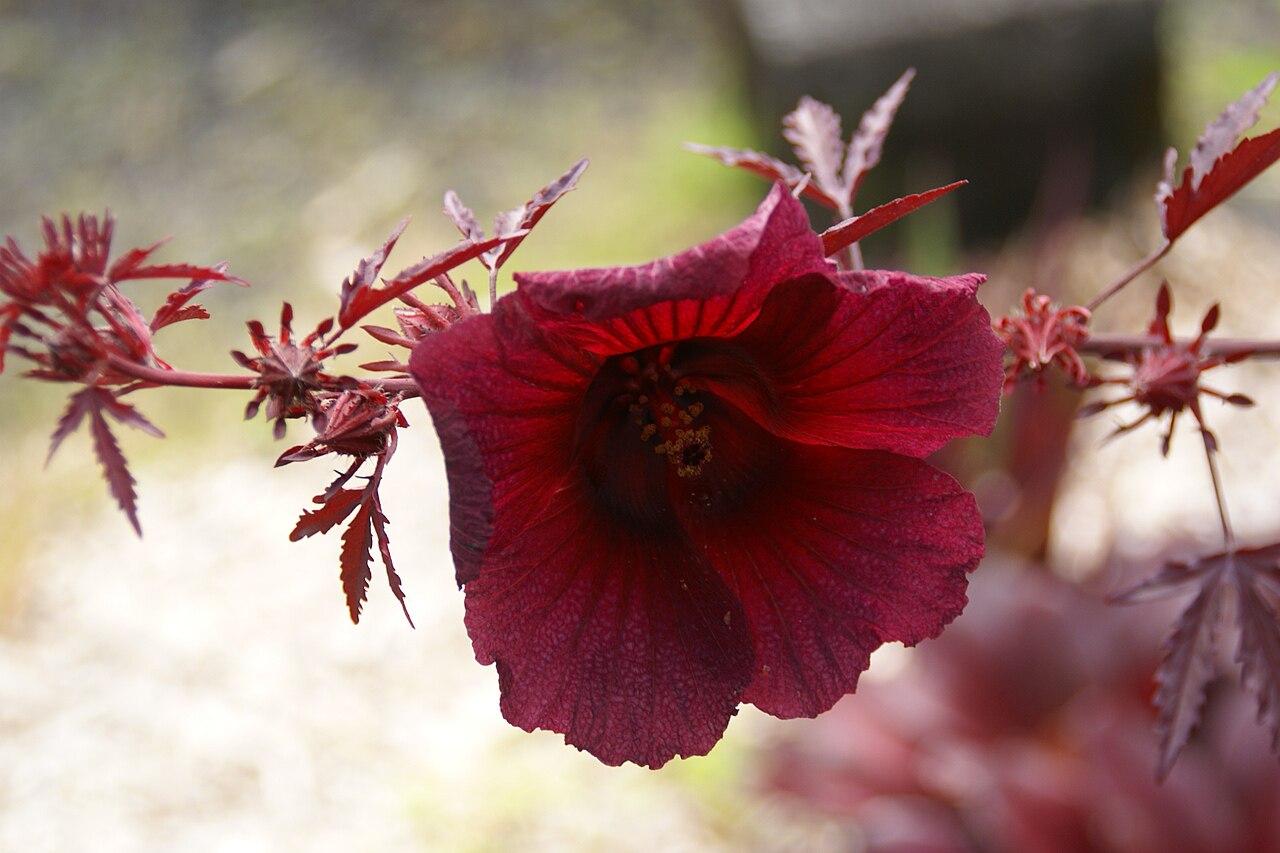
Hibiscus acetosella, the cranberry hibiscus or African rosemallow, is a flowering plant of the family Malvaceae. The epithet acetosella is of Latin origin and is a diminutive of the Latin name for sorrel which comes from the sour taste experienced when eating the young leaves of both plants. Hibiscus acetosella is also known colloquially as false roselle, maroon mallow, red leaved hibiscus, and red shield hibiscus. It is one of the approximately 200–300 species that are seen in sub-tropic and tropic regions. This ornamental is usually found in abandoned fields or open areas, marshes, and forest clearings. Cranberry hibiscus is a member of a perennial group known as hardy hibiscus. In contrast to the tropical hibiscus, hardy hibiscus can tolerate colder conditions, are more vigorous, longer lasting, and have larger flowers. In colder climates, Hibiscus acetosella is easily an annual, but is often regarded as a perennial to zone 8–11. During one season, the plant can grow 90–170 cm (3.0–5.6 ft) tall and 75 cm (30 in) wide as a shrub-subshrub.
- Family
- Malvaceae
How to use it
Cranberry hibiscus is not only a stunning ornamental plant but also has practical uses in landscaping. Its vibrant foliage can serve as a colorful backdrop in garden beds or as a striking focal point. Additionally, its ability to tolerate colder conditions makes it a valuable choice for gardeners in varying climates.
Sources: en.wikipedia.org
Gardening tip
When planting cranberry hibiscus, ensure it has plenty of sunlight and space to grow. It can reach heights of up to 5.6 feet, so give it room to thrive! If you're in a cooler climate, consider treating it as an annual to enjoy its beauty each season.
Sources: en.wikipedia.org
In the kitchen
The young leaves of cranberry hibiscus can be eaten, as they have a sour flavor similar to sorrel. They can be used in salads or as a tangy addition to various dishes. However, it's important to note that the plant is primarily grown for ornamental purposes rather than as a staple food source.
Sources: en.wikipedia.org
Ecology
How it lives
- Propagated by
- Seed
Full detailsevery field on the record, to copy
- Name
- Hibiscus acetosella
- Slug
- hibiscus-acetosella
- Kingdom
- Plantae
- Family
- Malvaceae
- Genus
- Hibiscus
- Species
- acetosella
- Wikidata QID
- Q5750828
- Propagule type
- seed
- Container suitable
- No
- Indoor suitable
- No
- OSSI pledged
- No
- Hazard level
- 1
- Data completeness
- 43
Generated sections & citations
summarywikipedia
gardening_tipllm_openai · confidence 0.90
- wikipedia (description.summary) — https://en.wikipedia.org/wiki/Hibiscus_acetosella
fun_facts_kidsllm_openai · confidence 0.90
- wikipedia (description.summary) — https://en.wikipedia.org/wiki/Hibiscus_acetosella
fun_facts_adultllm_openai · confidence 0.90
- wikipedia (description.summary) — https://en.wikipedia.org/wiki/Hibiscus_acetosella
cookingllm_openai · confidence 0.90
- wikipedia (description.summary) — https://en.wikipedia.org/wiki/Hibiscus_acetosella
how_to_usellm_openai · confidence 0.90
- wikipedia (description.summary) — https://en.wikipedia.org/wiki/Hibiscus_acetosella