Hemileccinum impolitum
Foraging: Never eat a wild mushroom on a photo or an app’s word. Many deadly species look like edible ones.
About
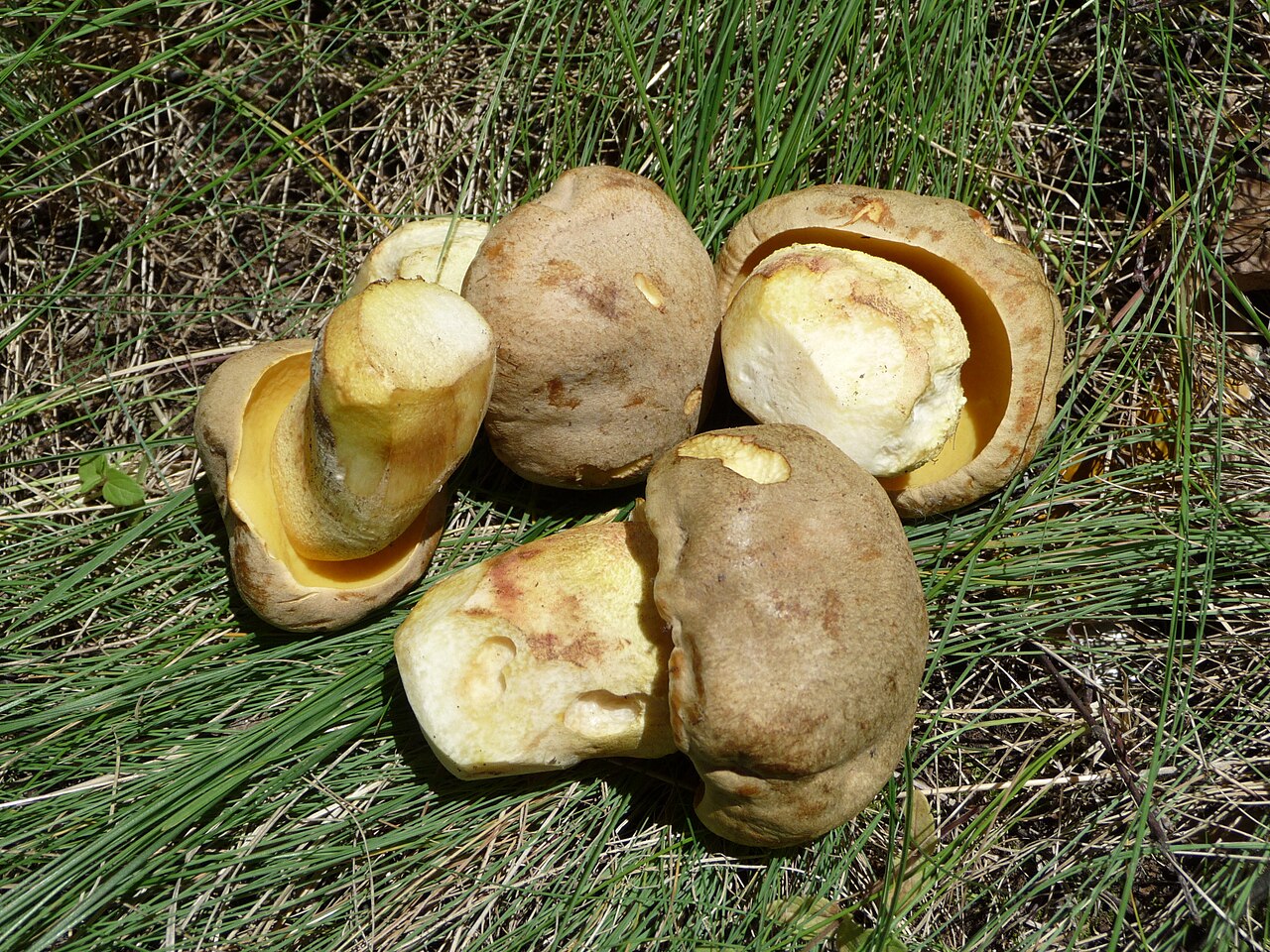
Hemileccinum impolitum is a basidiomycete fungus of the family Boletaceae, native to Europe. It is commonly referred to as the iodine bolete, because its fruit bodies tend to emit an iodine-like odour when cut, more detectable in the stem base or overripe specimens.
- Family
- Boletaceae
How to use it
The iodine bolete can be of interest to mycologists and mushroom enthusiasts for its unique characteristics, particularly its distinctive odor. While not edible, it contributes to the biodiversity of its ecosystem and can serve as an educational example of fungal diversity in nature.
Sources: en.wikipedia.org
In the kitchen
The iodine bolete is not typically eaten by humans, so it's best to admire this unique fungus in its natural habitat rather than trying to cook with it. Always ensure you know which mushrooms are safe to eat before considering them for your meals.
Sources: Wikidata
Full detailsevery field on the record, to copy
- Name
- Hemileccinum impolitum
- Slug
- hemileccinum-impolitum
- Kingdom
- Fungi
- Family
- Boletaceae
- Genus
- Hemileccinum
- Species
- impolitum
- Wikidata QID
- Q1323787
- Propagule type
- seed
- Container suitable
- No
- Indoor suitable
- No
- OSSI pledged
- No
- Hazard level
- 1
- Data completeness
- 43
Generated sections & citations
summarywikipedia
fun_facts_kidsllm_openai · confidence 0.80
- wikidata (common_name)
- wikidata (common_name)
- wikipedia (description.summary) — https://en.wikipedia.org/wiki/Hemileccinum_impolitum
fun_facts_adultllm_openai · confidence 0.80
- sprigloom (taxonomy)
- sprigloom (taxonomy)
- sprigloom (taxonomy)
- wikipedia (description.summary) — https://en.wikipedia.org/wiki/Hemileccinum_impolitum
cookingllm_openai · confidence 0.80
- wikidata (common_name)
how_to_usellm_openai · confidence 0.80
- wikipedia (description.summary) — https://en.wikipedia.org/wiki/Hemileccinum_impolitum