Hemerocallis fulva
Dangerous to: cats
If an animal has eaten this, call your vet.
The story
Native to Asia, this vibrant plant has captured imaginations across many cultures, earning a variety of names. In China, it is known as "萱草" (xuān cǎo) or the "forget-sorrow herb" (忘萱草), weaving a sense of emotional relief into its botanical identity. Meanwhile, in English-speaking regions, its midsummer blooms have earned it festive nicknames like the "Fourth of July lily" and the humble "ditch lily."
Sources: Wikidata, en.wikipedia.org
- Family
- Asphodelaceae
How to use it
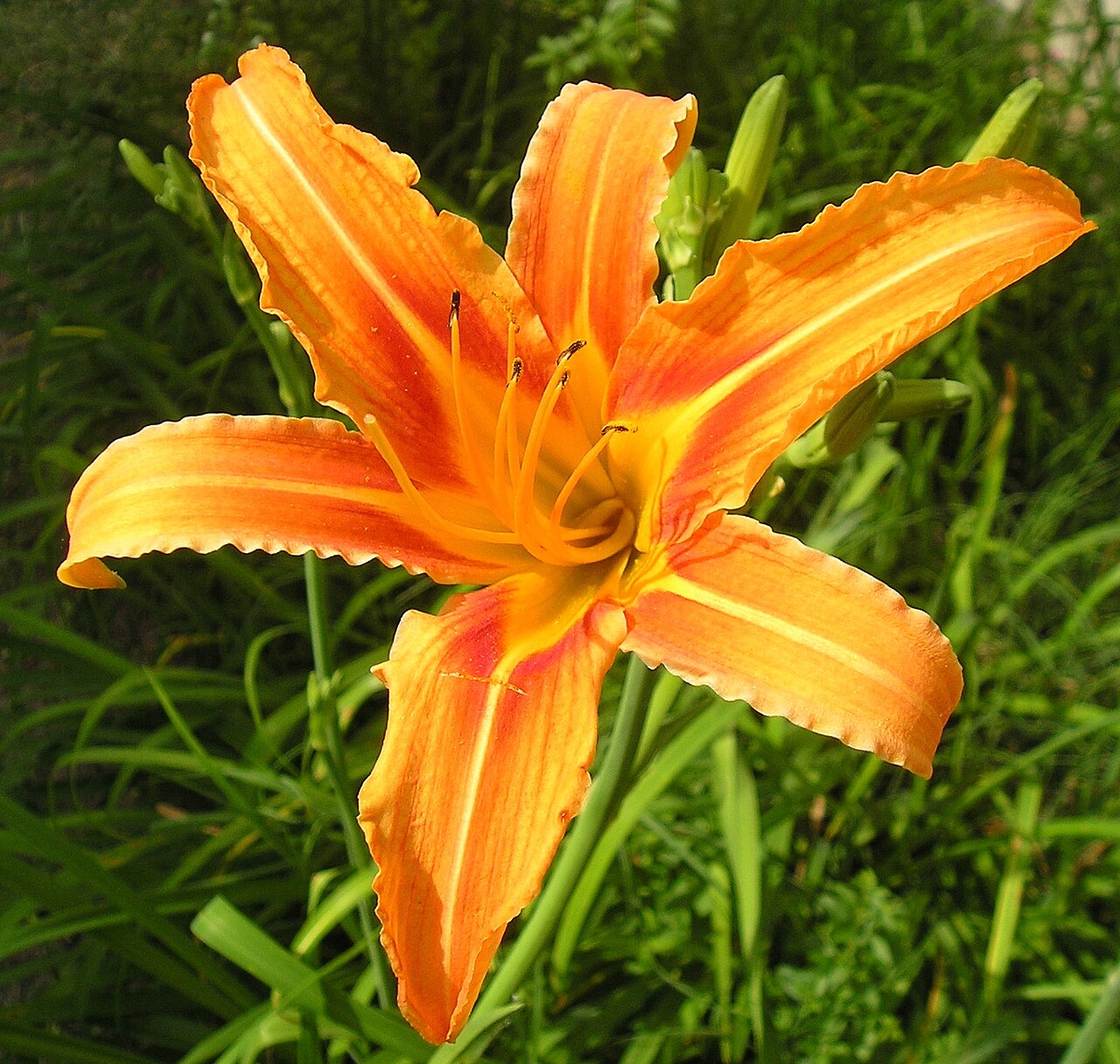
Hemerocallis fulva is very widely grown as an ornamental plant in temperate climates. Gardeners favor it for its showy, bright orange flowers and its exceptional ease of cultivation, making it a reliable choice for landscaping and garden borders.
Sources: en.wikipedia.org
Gardening tip
When planting orange daylilies, make sure to dig a hole that is about 12 to 18 inches deep. This depth allows the roots to establish well and helps the plant thrive. They prefer full sun and well-drained soil for the best blooms!
Sources: en.wikipedia.org
In the kitchen
The orange daylily is not typically eaten by humans, as it is primarily grown for ornamental purposes. While some parts of the plant are edible, caution is advised, and it is best to enjoy this beautiful flower in gardens rather than on your plate.
Sources: en.wikipedia.org
About
Hemerocallis fulva, the orange day-lily, tawny daylily, corn lily, tiger daylily, fulvous daylily, ditch lily or Fourth of July lily, is a species of daylily native to Asia. It is very widely grown as an ornamental plant in temperate climates for its showy flowers and ease of cultivation. It is not a true lily in the genus Lilium, but gets its common name from the superficial similarity of its flowers to Lilium and from the fact that each flower lasts only one day.
Ecology
How it lives
- Propagated by
- Seed
Full detailsevery field on the record, to copy
- Name
- Hemerocallis fulva
- Slug
- hemerocallis-fulva
- Kingdom
- Plantae
- Family
- Asphodelaceae
- Genus
- Hemerocallis
- Species
- fulva
- Wikidata QID
- Q1424440
- Propagule type
- seed
- Container suitable
- No
- Indoor suitable
- No
- OSSI pledged
- No
- Hazard level
- 1
- Data completeness
- 43
Generated sections & citations
summarywikipedia
cookingllm_openai · confidence 0.90
- wikipedia (description.summary) — https://en.wikipedia.org/wiki/Hemerocallis_fulva
how_to_usellm_gemini · confidence 1.00
- wikipedia (description.summary) — https://en.wikipedia.org/wiki/Hemerocallis_fulva
gardening_tipllm_openai · confidence 0.90
- wikipedia (description.summary) — https://en.wikipedia.org/wiki/Hemerocallis_fulva
fun_facts_kidsllm_gemini · confidence 1.00
- wikidata (common_name)
- wikipedia (description.summary) — https://en.wikipedia.org/wiki/Hemerocallis_fulva
fun_facts_adultllm_gemini · confidence 1.00
- wikidata (common_name)
- wikipedia (description.summary) — https://en.wikipedia.org/wiki/Hemerocallis_fulva
storyllm_gemini · confidence 1.00
- wikidata (common_name)
- wikidata (common_name)
- wikidata (common_name)
- wikipedia (description.summary) — https://en.wikipedia.org/wiki/Hemerocallis_fulva