Heliconia rostrata
About
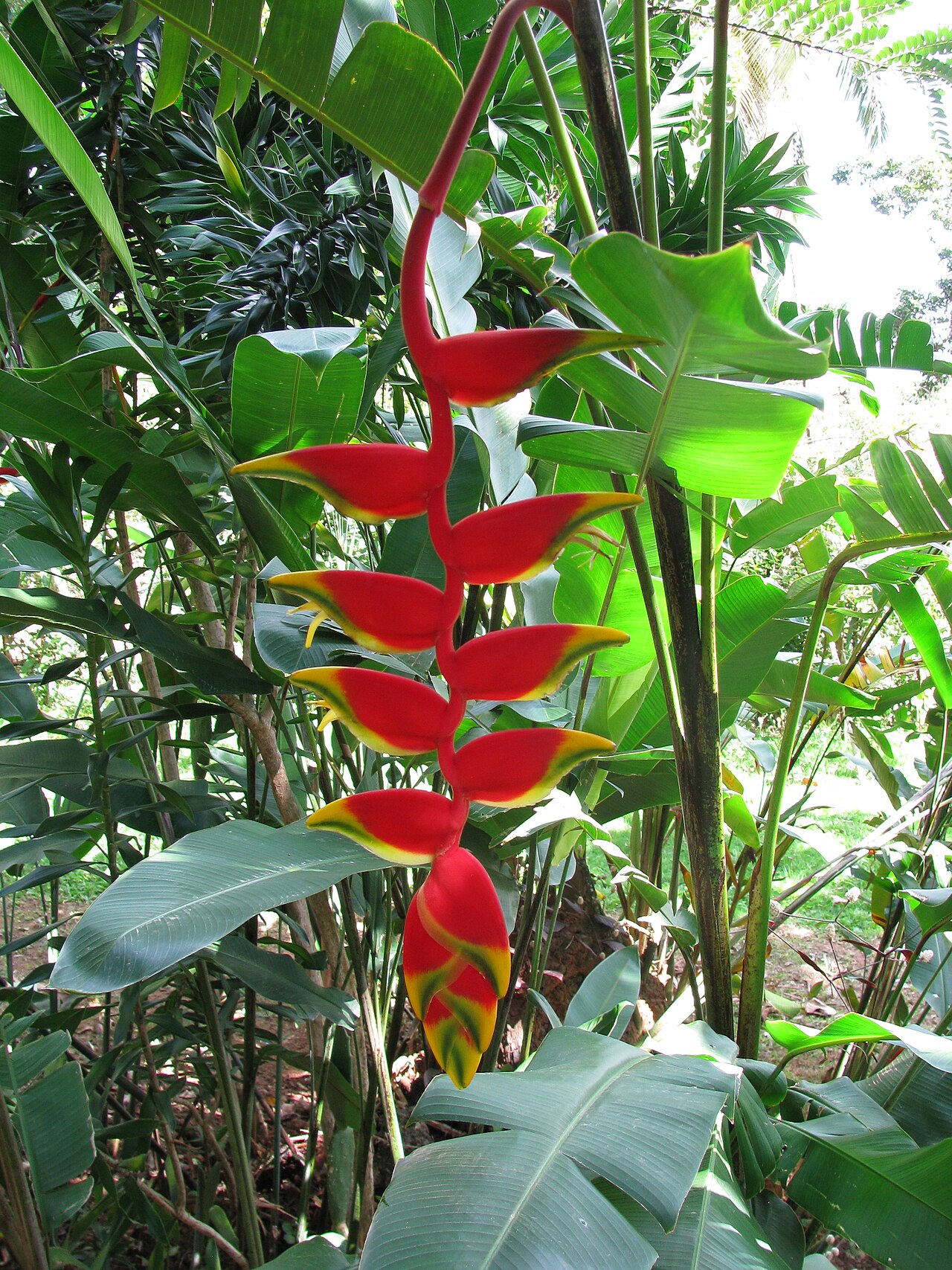
Heliconia rostrata, the hanging lobster claw or false bird of paradise, is a herbaceous perennial plant native to El Salvador, Peru, Bolivia, Colombia, Venezuela, Costa Rica, and Ecuador, and naturalized in Puerto Rico. It is found in tropical rainforests, as it thrives in warm and humid environments. The inflorescences of many other heliconias grow vertically, facing upwards, their cup-shaped bracts storing water for birds and insects. This plant, however, has pendulous inflorescences with the bracts facing downwards, the flowers nestled underneath. Without the collection of rainwater in the bracts, the flowers within them provide a source of undiluted nectar.
- Family
- Heliconiaceae
How to use it
The hanging lobster claw is primarily used as an ornamental plant, adding a tropical flair to gardens and landscapes. Its striking appearance makes it a favorite for decorative arrangements, and its ability to attract pollinators can enhance local biodiversity.
Sources: en.wikipedia.org
Ecology
How it lives
- Propagated by
- Seed
Full detailsevery field on the record, to copy
- Name
- Heliconia rostrata
- Slug
- heliconia-rostrata
- Kingdom
- Plantae
- Family
- Heliconiaceae
- Genus
- Heliconia
- Species
- rostrata
- Wikidata QID
- Q2703222
- Propagule type
- seed
- Container suitable
- No
- Indoor suitable
- No
- OSSI pledged
- No
- Hazard level
- 1
- Data completeness
- 43
Generated sections & citations
summarywikipedia
fun_facts_kidsllm_openai · confidence 0.80
- wikipedia (description.summary) — https://en.wikipedia.org/wiki/Heliconia_rostrata
fun_facts_adultllm_openai · confidence 0.80
- sprigloom (taxonomy)
- sprigloom (taxonomy)
- wikipedia (description.summary) — https://en.wikipedia.org/wiki/Heliconia_rostrata
how_to_usellm_openai · confidence 0.80
- wikipedia (description.summary) — https://en.wikipedia.org/wiki/Heliconia_rostrata