Hedera helix
Mildly toxic, or toxic in part — know which parts are safe before eating any of it.
If someone has eaten it, call emergency services or your poison control centre.
The story
Throughout history, common ivy has held considerable cultural significance and symbolism. Native to Europe and western Asia, this clinging evergreen vine has woven its way through human history, transforming from a wild plant of the forests into a deeply symbolic ornamental species that people have cherished for generations.
Sources: en.wikipedia.org
- Family
- Araliaceae
How to use it
Common ivy is highly popular as an ornamental plant, frequently used to cover walls, fences, and tree trunks in gardens. However, because it is a vigorous grower, escaped plants have easily naturalized outside of their native European and western Asian range.
Sources: en.wikipedia.org
Gardening tip
When planting ivy, make sure to give it plenty of space to climb! It loves to attach itself to surfaces, so consider placing it near a wall or trellis. This will help it thrive and create a lush green display.
Sources: en.wikipedia.org
In the kitchen
Ivy is not eaten by humans, as it can be toxic if ingested. It's best to admire this beautiful plant from a distance and enjoy its greenery in your garden or home without trying to eat it.
Sources: en.wikipedia.org
About
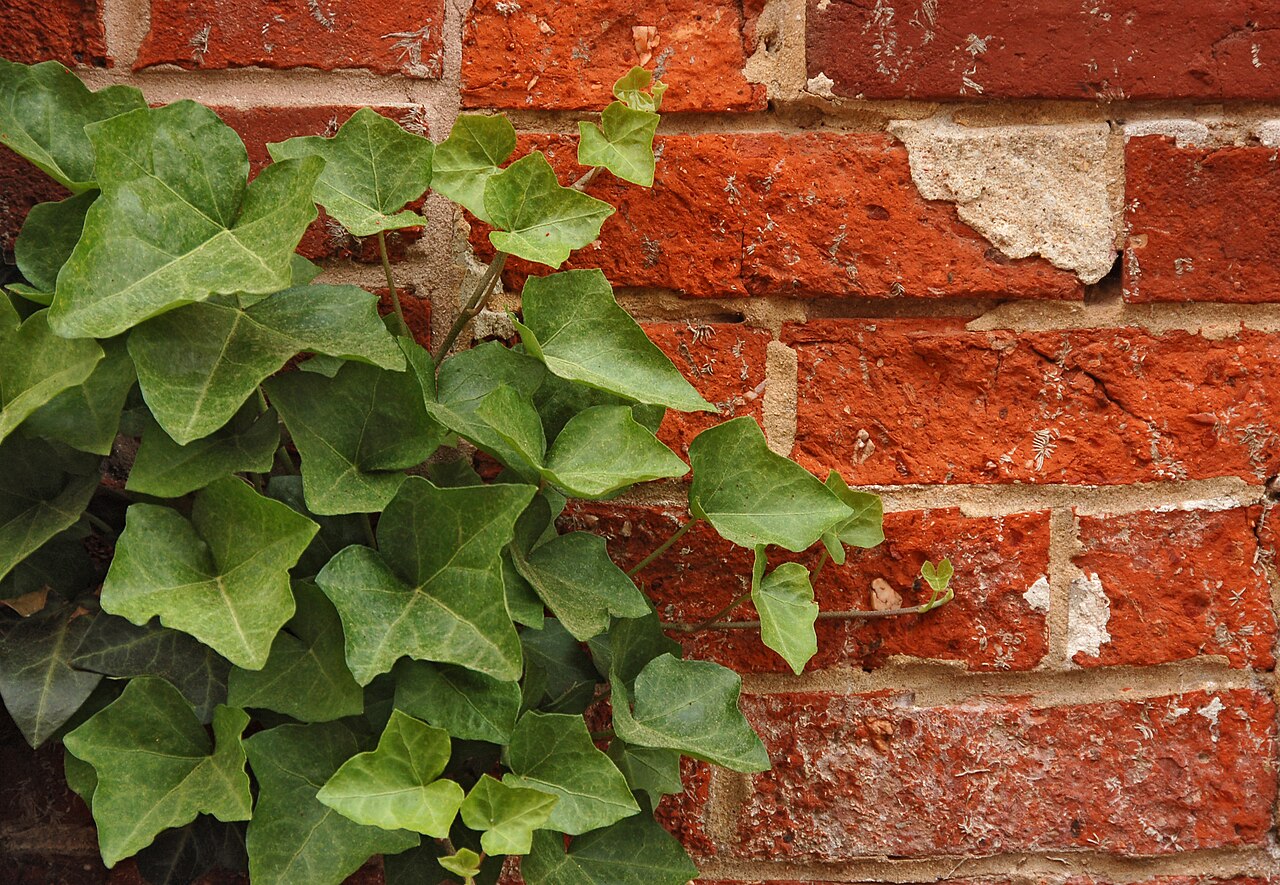
Hedera helix, simply ivy, or common ivy, English ivy, European ivy, King's choice ivy, is a species of flowering plant in the family Araliaceae. It is native to most of Europe and parts of western Asia. Ivy is a clinging evergreen vine that grows on tree trunks, walls, and fences in gardens, waste spaces, and wild habitats. Ivy is popular as an ornamental plant, but escaped plants have become naturalised outside its native range. Ivy has considerable cultural significance and symbolism.
Ecology
How it lives
- Propagated by
- Seed
Full detailsevery field on the record, to copy
- Name
- Hedera helix
- Slug
- hedera-helix
- Kingdom
- Plantae
- Family
- Araliaceae
- Genus
- Hedera
- Species
- helix
- Wikidata QID
- Q26354
- Propagule type
- seed
- Container suitable
- No
- Indoor suitable
- No
- OSSI pledged
- No
- Hazard level
- 2
- Data completeness
- 43
Generated sections & citations
summarywikipedia
cookingllm_openai · confidence 0.90
- wikipedia (description.summary) — https://en.wikipedia.org/wiki/Hedera_helix
gardening_tipllm_openai · confidence 0.90
- wikipedia (description.summary) — https://en.wikipedia.org/wiki/Hedera_helix
fun_facts_kidsllm_gemini · confidence 1.00
- wikidata (common_name)
- wikipedia (description.summary) — https://en.wikipedia.org/wiki/Hedera_helix
fun_facts_adultllm_gemini · confidence 1.00
- sprigloom (taxonomy)
- wikidata (common_name)
- wikipedia (description.summary) — https://en.wikipedia.org/wiki/Hedera_helix
storyllm_gemini · confidence 1.00
- wikipedia (description.summary) — https://en.wikipedia.org/wiki/Hedera_helix
how_to_usellm_gemini · confidence 1.00
- wikipedia (description.summary) — https://en.wikipedia.org/wiki/Hedera_helix