2LearnKept species
Goose
Anser anser
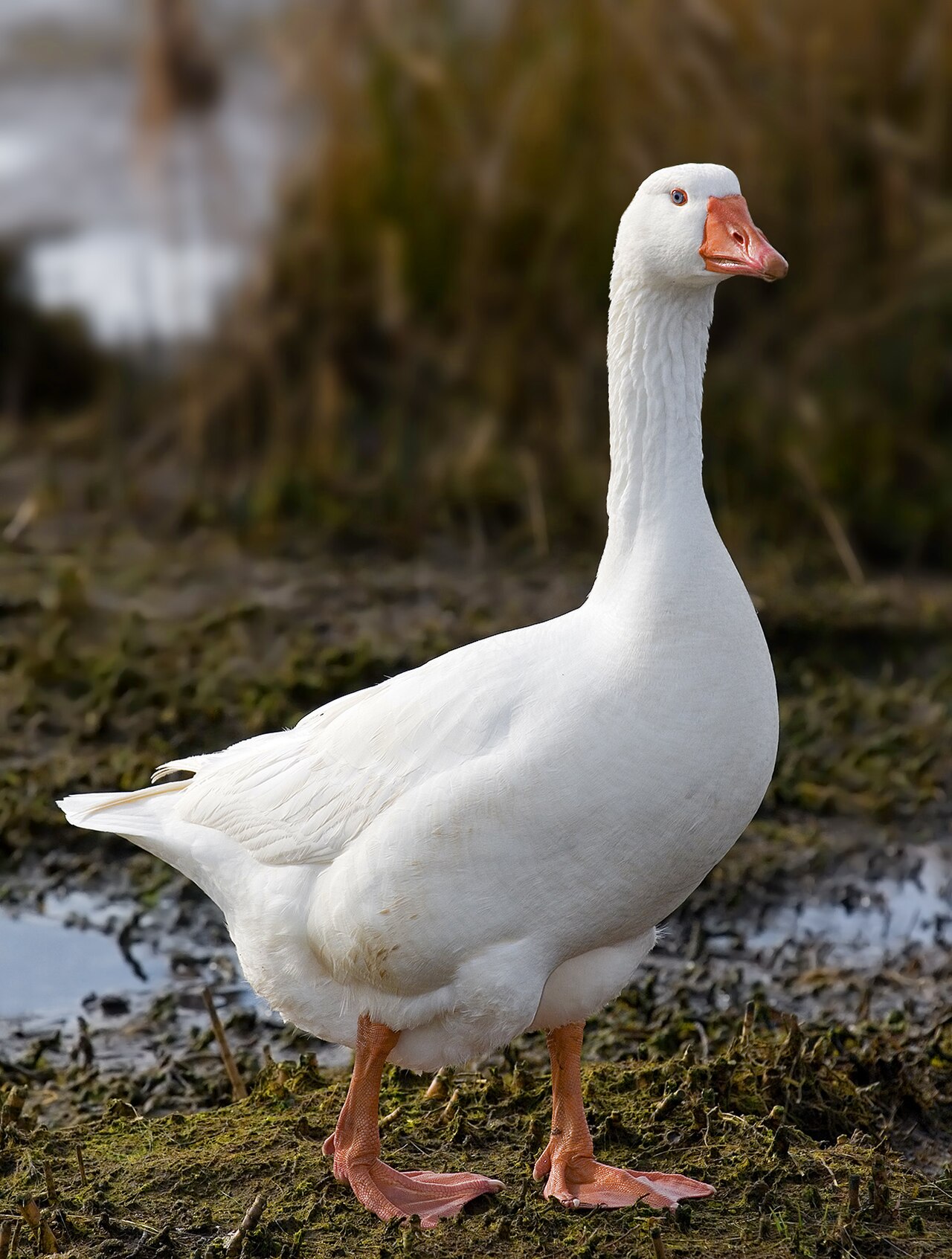
Most domestic geese descend from the greylag goose, while some Asian breeds come from the swan goose. They are kept for meat, eggs and down, and they graze so efficiently that they are used to weed crops and orchards. Alert and loud, they also raise the alarm when strangers arrive.
About
Breed of domesticated bird (Aves).
- Family
- Anatidae
Keeping
How it is kept
Kept for
- Meat
- Eggs
- Guarding
- Mature weight
- 4–12 kg
- Lifespan
- 10–20 years
- Incubation
- 30 days
- Temperament
- Alert, vocal and loyal; ganders can be aggressive while nesting
- Forage
- True grazers that take most of their food from good, short grass. Give grain or waterfowl pellets in winter, when grass is poor and while they are laying.
- Housing
- A simple, predator-proof shelter for the night and well-drained grass to graze. Water deep enough to bathe in keeps their plumage in good condition.
- Good to know
- Pasture quality matters more than bought feed, so plan grazing for the whole flock. Geese are long-lived and form strong bonds with each other and with their keepers. Ganders can be aggressive in spring, so take care with children around nesting birds.
Photos, videos and notes
From keepers
Known as
Names around the world
- en
- goose, domestic goose
Full detailsevery field on the record, to copy
- Name
- Goose
- Slug
- goose
- Kingdom
- Animalia
- Family
- Anatidae
- Genus
- Anser
- Species
- anser
- Wikidata QID
- Q255503
- Container suitable
- No
- Indoor suitable
- No
- OSSI pledged
- No
- Hazard level
- 1
- Data completeness
- 48
Generated sections & citations
summarywikidata