Gleichenia polypodioides
About
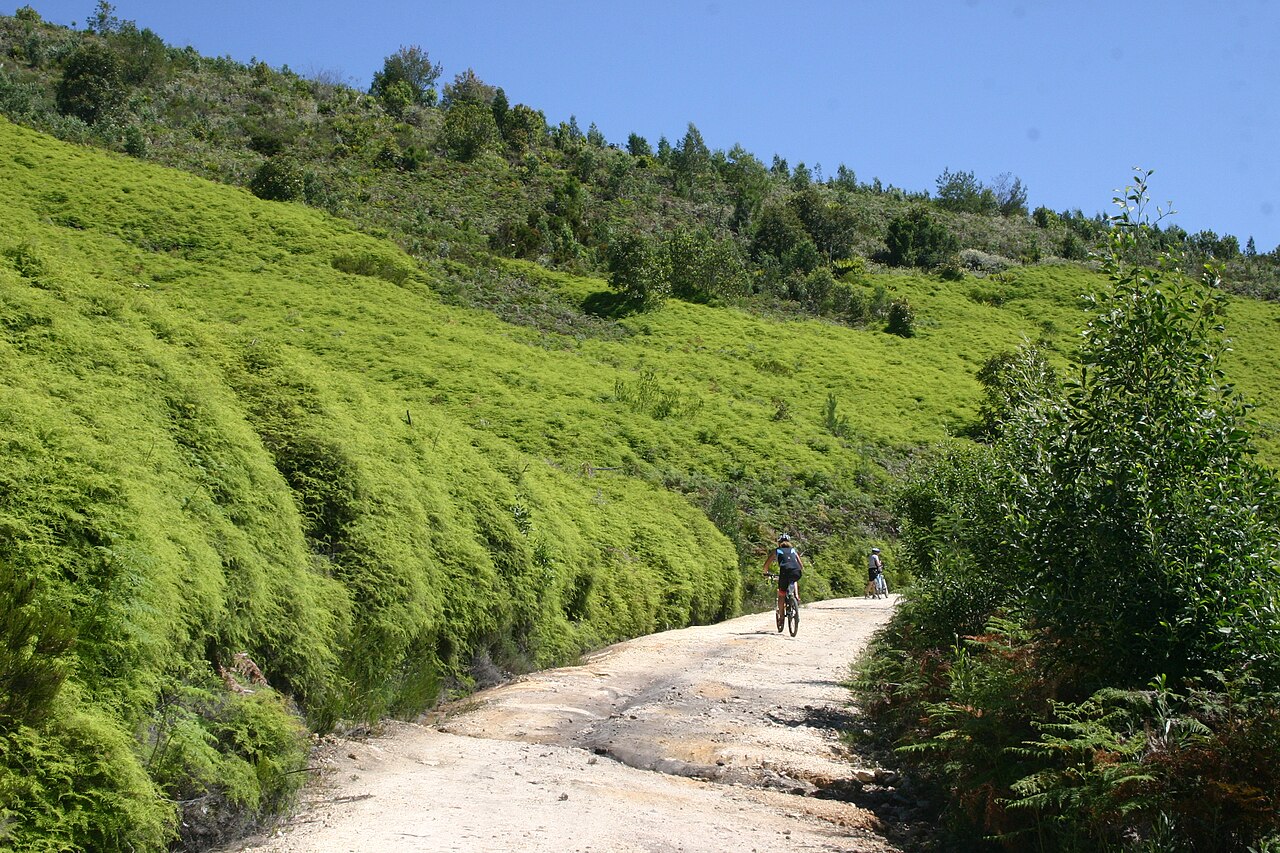
Gleichenia polypodioides (L.) Sm., commonly known as coral fern, kystervaring or ystervaring due to its glabrous, brown, wiry stipes. The species is widespread in south- and east tropical Africa, southern Africa and the western Indian Ocean region. It occurs naturally in a broad coastal belt in South Africa, Lesotho, Eswatini, Angola, Malawi, Burundi, Tanzania, Mozambique, Zimbabwe, Mauritius, Réunion, Amsterdam Island and Madagascar, and was first described by Carl Linnaeus in 1771 under the name Onoclea polypodioides. Often forming dense and impenetrable thickets, sometimes over large areas, this rhizomatous perennial is an important pioneer in disturbed areas such as pine plantations. It is often mistakenly seen as an exotic invader rather than as a useful rehabilitation plant, a source of peat and growing medium, while showing exceptional resistance to herbicides.Rhizome brown, 1–2.5 mm. in diam., creeping, with long-spined dark-brown scales up to 0.5 mm. in diam., with fronds spaced 2–20 cm. apart. Stipe castaneous, up to 60 cm. long and up to 1.5 mm. in diam., glabrous or with a few scales similar to those on the rhizome, shallowly sulcate. Frond bifurcate to reniform-lunate in outline, with 1 level of false dichotomy in each lateral branch system arising from each side of the terminal bud; all branches bearing distant foliar segments. Aborted apical buds up to 1.2 mm. long, clothed in dark-brown lanceolate laciniate scales. Pinnules linear, up to 7 x 0.75 cm., pinnate, usually glabrous, divided into sessile rounded entire triangular lobes, 3 x 2 mm., green to glaucous below. Sori partially immersed in the lamina, consisting of 2–4 sporangia, each in a separate but adjoining pit.
- Family
- Gleicheniaceae
How to use it
Coral ferns are great for ecological restoration projects. They can help stabilize soil and improve conditions in disturbed areas, making them a useful plant for those looking to rehabilitate landscapes. Their ability to thrive in tough environments makes them a valuable resource for restoring natural habitats.
Sources: en.wikipedia.org
Gardening tip
If you're planting coral ferns, make sure to space them about 2 to 20 cm apart to allow for their natural growth pattern. This will help them thrive and form those dense thickets they are known for.
Sources: en.wikipedia.org
Ecology
How it lives
- Propagated by
- Seed
Full detailsevery field on the record, to copy
- Name
- Gleichenia polypodioides
- Slug
- gleichenia-polypodioides
- Kingdom
- Plantae
- Family
- Gleicheniaceae
- Genus
- Gleichenia
- Species
- polypodioides
- Wikidata QID
- Q5567511
- Propagule type
- seed
- Container suitable
- No
- Indoor suitable
- No
- OSSI pledged
- No
- Hazard level
- 1
- Data completeness
- 43
Generated sections & citations
summarywikipedia
fun_facts_kidsllm_openai · confidence 0.80
- wikipedia (description.summary) — https://en.wikipedia.org/wiki/Gleichenia_polypodioides
fun_facts_adultllm_openai · confidence 0.80
- wikipedia (description.summary) — https://en.wikipedia.org/wiki/Gleichenia_polypodioides
how_to_usellm_openai · confidence 0.80
- wikipedia (description.summary) — https://en.wikipedia.org/wiki/Gleichenia_polypodioides
gardening_tipllm_openai · confidence 0.80
- wikipedia (description.summary) — https://en.wikipedia.org/wiki/Gleichenia_polypodioides