2Learn
Zào jiá
Gleditsia sinensis
How to use it
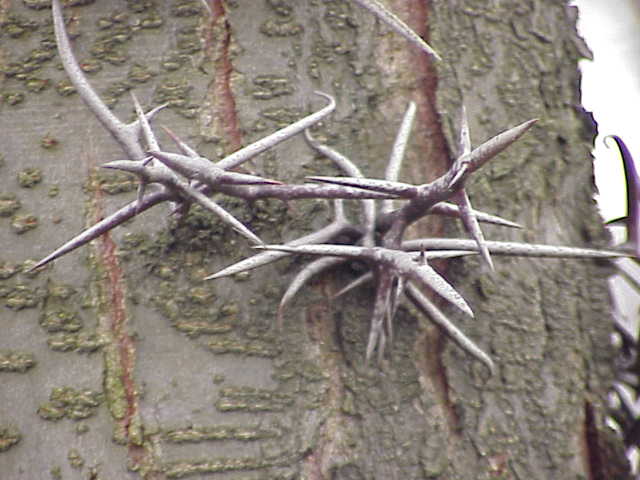
The Chinese honey locust is often used in landscaping due to its unique appearance and resilience. Its spiky pods can provide a striking visual element in gardens, while its ability to improve soil quality makes it a beneficial addition to various ecosystems. [1, 2, 4]
Sources: Grangery, en.wikipedia.org
In the kitchen
The Chinese honey locust is not typically eaten by humans. Its pods are spiky and not considered edible, so it's best to admire this tree for its beauty rather than for culinary uses.
Sources: en.wikipedia.org
Ecology
How it lives
- Propagated by
- Seed
Full detailsevery field on the record, to copy
- Name
- Gleditsia sinensis
- Slug
- gleditsia-sinensis
- Kingdom
- Plantae
- Family
- Fabaceae
- Genus
- Gleditsia
- Species
- sinensis
- Wikidata QID
- Q1021983
- Propagule type
- seed
- Container suitable
- No
- Indoor suitable
- No
- OSSI pledged
- No
- Hazard level
- 1
- Data completeness
- 43
Generated sections & citations
summarywikipedia
fun_facts_kidsllm_openai · confidence 0.80
- sprigloom (taxonomy)
- sprigloom (taxonomy)
- wikipedia (description.summary) — https://en.wikipedia.org/wiki/Gleditsia_sinensis
fun_facts_adultllm_openai · confidence 0.80
- sprigloom (taxonomy)
- sprigloom (taxonomy)
- wikipedia (description.summary) — https://en.wikipedia.org/wiki/Gleditsia_sinensis
how_to_usellm_openai · confidence 0.80
- sprigloom (taxonomy)
- sprigloom (taxonomy)
- wikipedia (description.summary) — https://en.wikipedia.org/wiki/Gleditsia_sinensis
cookingllm_openai · confidence 0.80
- wikipedia (description.summary) — https://en.wikipedia.org/wiki/Gleditsia_sinensis