Exidia thuretiana
Foraging: Never eat a wild mushroom on a photo or an app’s word. Many deadly species look like edible ones.
About
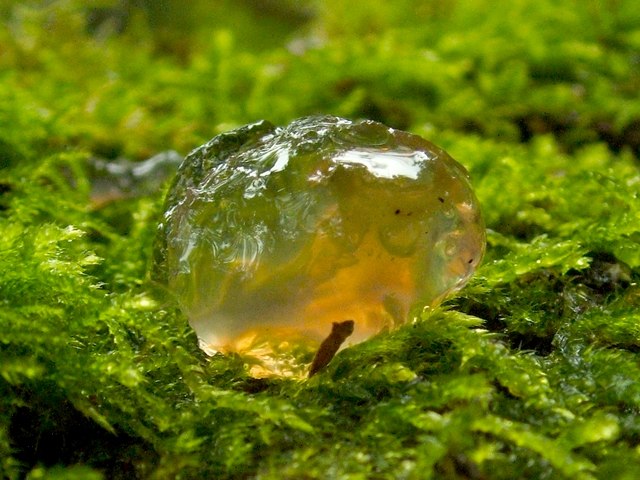
Exidia thuretiana is a jelly fungus in the family Auriculariaceae. The fruit bodies are white and gelatinous with brain-like folds. It is a common, wood-rotting species in Europe, typically growing on dead attached or fallen branches of broadleaf trees, especially beech.
- Family
- Auriculariaceae
How to use it
Exidia thuretiana plays an important ecological role as a decomposer. By breaking down dead wood, it helps recycle nutrients back into the soil, promoting healthy forest ecosystems. This jelly fungus can also be used in studies of fungal biology and ecology due to its unique characteristics.
Sources: en.wikipedia.org
In the kitchen
Exidia thuretiana is not eaten by humans. While it may look intriguing, this jelly fungus is not considered edible and should be admired in its natural habitat rather than in the kitchen.
Sources: Wikidata
Full detailsevery field on the record, to copy
- Name
- Exidia thuretiana
- Slug
- exidia-thuretiana
- Kingdom
- Fungi
- Family
- Auriculariaceae
- Genus
- Exidia
- Species
- thuretiana
- Wikidata QID
- Q1323831
- Propagule type
- seed
- Container suitable
- No
- Indoor suitable
- No
- OSSI pledged
- No
- Hazard level
- 1
- Data completeness
- 43
Generated sections & citations
summarywikipedia
cookingllm_openai · confidence 0.80
- wikidata (common_name)
fun_facts_kidsllm_openai · confidence 0.80
- sprigloom (taxonomy)
- wikipedia (description.summary) — https://en.wikipedia.org/wiki/Exidia_thuretiana
fun_facts_adultllm_openai · confidence 0.80
- sprigloom (taxonomy)
- sprigloom (taxonomy)
- wikipedia (description.summary) — https://en.wikipedia.org/wiki/Exidia_thuretiana
how_to_usellm_openai · confidence 0.80
- wikipedia (description.summary) — https://en.wikipedia.org/wiki/Exidia_thuretiana