Bell-shaped Nolanea
Entoloma mammosum
Foraging: Never eat a wild mushroom on a photo or an app’s word. Many deadly species look like edible ones.
About
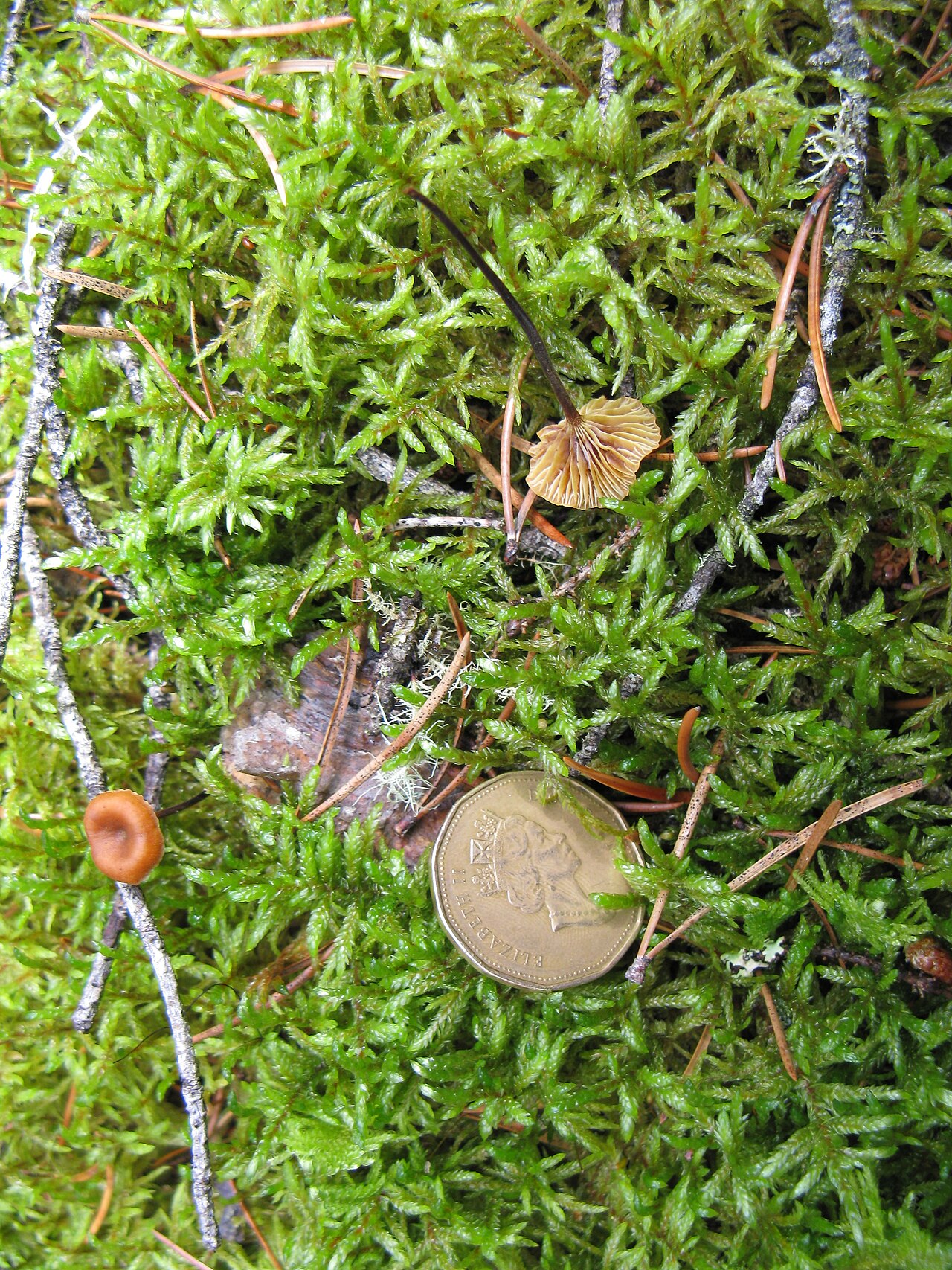
Entoloma mammosum, commonly known as the bell-shaped Nolanea, is a species of fungus in the family Entolomataceae. The fruit bodies are small and nippled, with a striate cap, salmon-colored gills, and a stately stalk. It is typically found growing in feather moss under spruce and Jack pine in the summer and fall. It is saprobic, and derives nutrients from rotting organic matter. The fungus was originally described by Carl Linnaeus in 1753 as Agaricus mammosus. American mycologist Lexemuel Ray Hesler transferred it to Entoloma in 1967.
- Family
- Entolomataceae
How to use it
Entoloma mammosum is saprobic, meaning it helps decompose rotting organic matter, contributing to nutrient cycling in its ecosystem. This process is vital for maintaining healthy forest environments, as it enriches the soil and supports plant growth.
Sources: en.wikipedia.org
Full detailsevery field on the record, to copy
- Name
- Entoloma mammosum
- Slug
- entoloma-mammosum
- Kingdom
- Fungi
- Family
- Entolomataceae
- Genus
- Entoloma
- Species
- mammosum
- Wikidata QID
- Q5229600
- Propagule type
- seed
- Container suitable
- No
- Indoor suitable
- No
- OSSI pledged
- No
- Hazard level
- 1
- Data completeness
- 43
Generated sections & citations
summarywikipedia
fun_facts_kidsllm_openai · confidence 0.80
- wikipedia (description.summary) — https://en.wikipedia.org/wiki/Entoloma_mammosum
fun_facts_adultllm_openai · confidence 0.80
- wikipedia (description.summary) — https://en.wikipedia.org/wiki/Entoloma_mammosum
how_to_usellm_openai · confidence 0.80
- wikipedia (description.summary) — https://en.wikipedia.org/wiki/Entoloma_mammosum