Echinocereus enneacanthus
How to use it
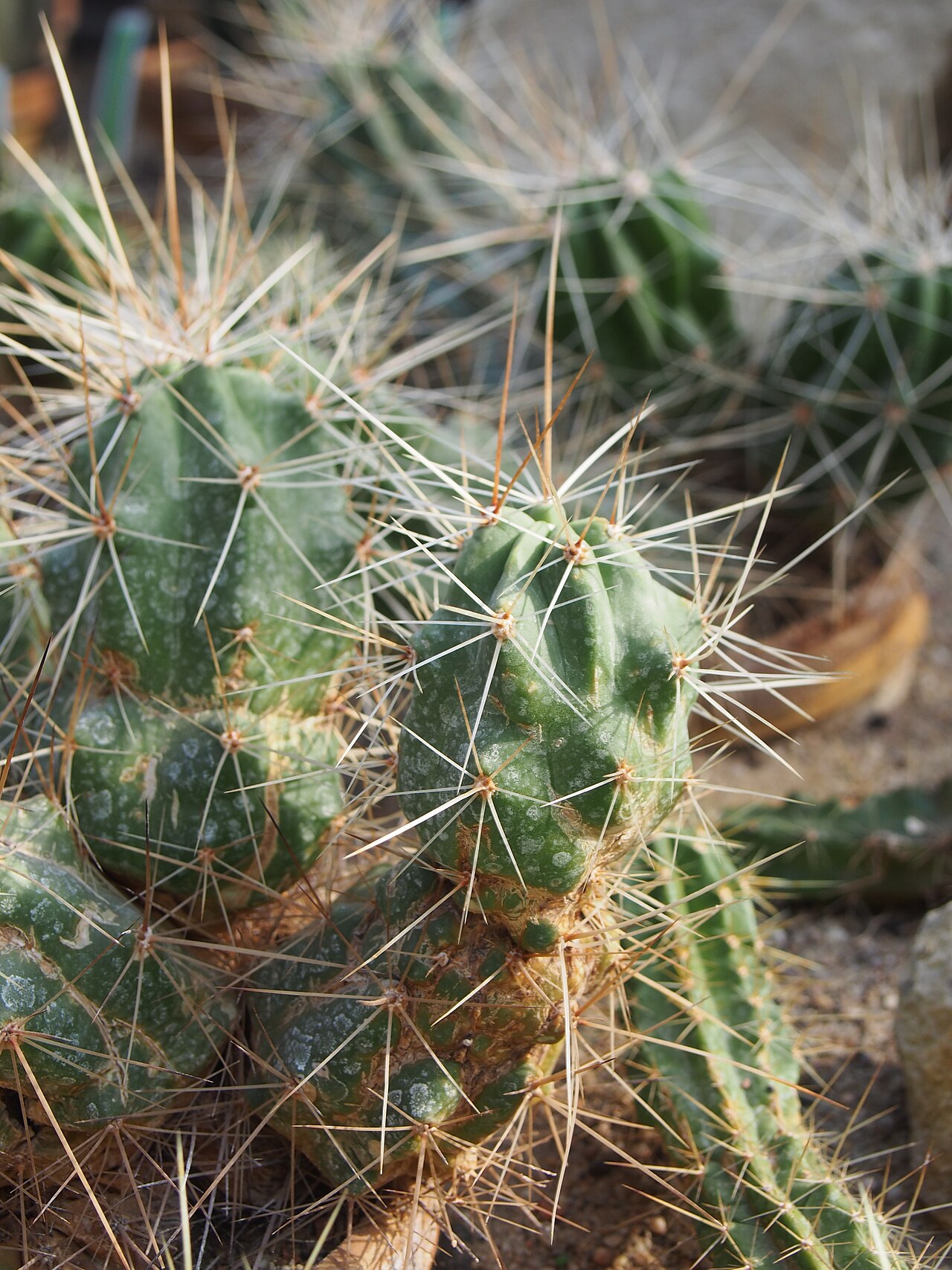
Echinocereus enneacanthus can be used ornamentally in gardens and landscapes, particularly in xeriscaping, where water conservation is key. Its unique appearance makes it a popular choice for adding texture and interest to dry gardens. Additionally, it can serve as a habitat for local wildlife, contributing to biodiversity.
Sources: Grangery
In the kitchen
Echinocereus enneacanthus, or Pitaya, is not typically eaten by humans. While some cacti are edible, this particular species is more appreciated for its ornamental beauty than for culinary uses. Always ensure you know which plants are safe to eat before trying them!
Sources: Wikidata
Ecology
How it lives
- Propagated by
- Seed
Full detailsevery field on the record, to copy
- Name
- Echinocereus enneacanthus
- Slug
- echinocereus-enneacanthus
- Kingdom
- Plantae
- Family
- Cactaceae
- Genus
- Echinocereus
- Species
- enneacanthus
- Wikidata QID
- Q291700
- Propagule type
- seed
- Container suitable
- No
- Indoor suitable
- No
- OSSI pledged
- No
- Hazard level
- 1
- Data completeness
- 43
Generated sections & citations
summarywikipedia
fun_facts_kidsllm_openai · confidence 0.80
- wikidata (common_name)
- wikidata (common_name)
fun_facts_adultllm_openai · confidence 0.80
- sprigloom (taxonomy)
- sprigloom (taxonomy)
- wikipedia (description.summary) — https://en.wikipedia.org/wiki/Echinocereus_enneacanthus
cookingllm_openai · confidence 0.80
- wikidata (common_name)
how_to_usellm_openai · confidence 0.80
- sprigloom (taxonomy)