2LearnKept species
Duck
Anas platyrhynchos
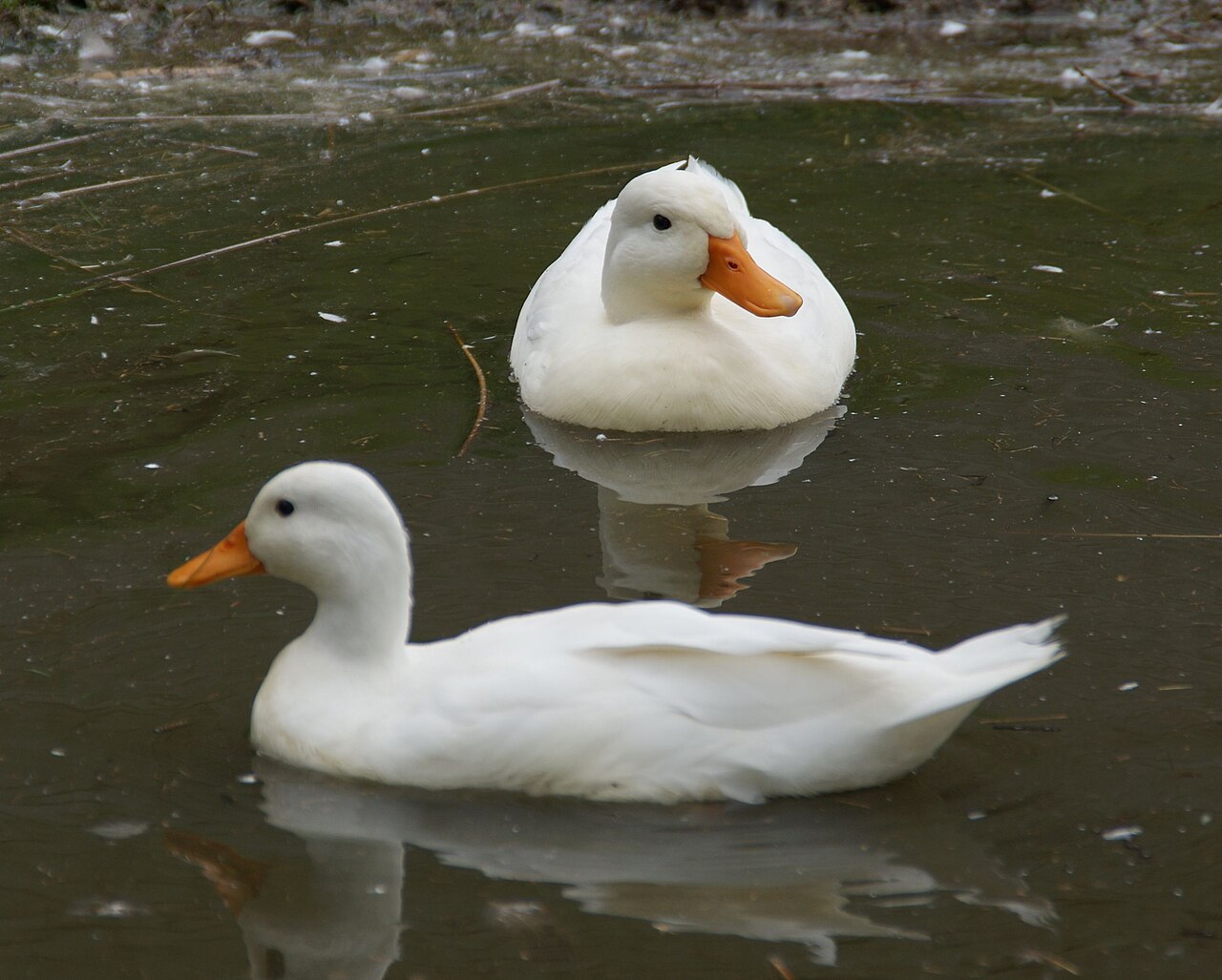
The domestic duck descends from the mallard and is kept for eggs and meat, and in gardens for clearing slugs and snails. Domestic breeds are heavier than their wild ancestor and most cannot fly. The best laying breeds produce as many eggs in a year as a good laying hen.
About
Farm animal.
- Family
- Anatidae
Keeping
How it is kept
Kept for
- Eggs
- Meat
- Temperament
- Sociable and chatty; happiest in a group
- Mature weight
- 1.5–4.5 kg
- Lifespan
- 8–12 years
- Incubation
- 28 days
- Forage
- Good foragers of grass, slugs and insects, but they need a balanced waterfowl or poultry feed as well. Drinking water must be deep enough for them to dip their whole head.
- Housing
- A dry, predator-proof house for the night with deep bedding on the floor, since ducks do not perch. Low fencing keeps in the heavy breeds that cannot fly.
- Good to know
- Ducks need water to clean their eyes and nostrils, but not necessarily a pond. They turn wet ground to mud quickly, so plan for drainage and move their area if you can. Ducklings raised without a mother should not swim unsupervised until they are fully feathered.
Photos, videos and notes
From keepers
Known as
Names around the world
- en
- duck, domestic duck
Full detailsevery field on the record, to copy
- Name
- Duck
- Slug
- duck
- Kingdom
- Animalia
- Family
- Anatidae
- Genus
- Anas
- Species
- platyrhynchos
- Wikidata QID
- Q742292
- Container suitable
- No
- Indoor suitable
- No
- OSSI pledged
- No
- Hazard level
- 1
- Data completeness
- 48
Generated sections & citations
summarywikidata