Drosera scorpioides
About
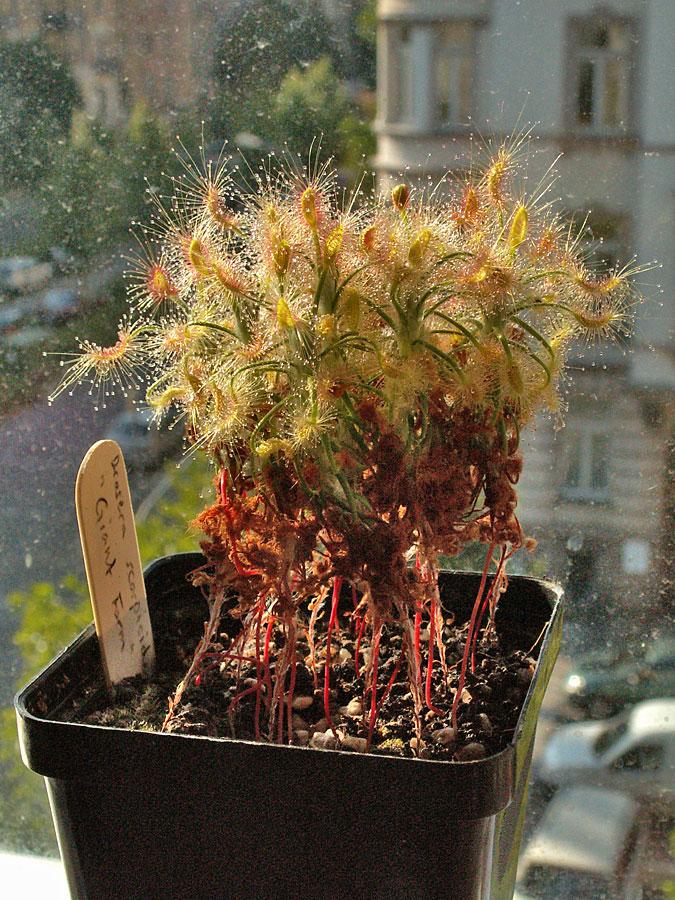
Drosera scorpioides, commonly called the shaggy sundew, is a pygmy sundew native to the Jarrah Forest region and southern coasts of Southwest Australia. Notable for its unusually large size relative to other pygmy sundews, D. scorpioides can produce rosettes measuring up to two inches in diameter and specimens may attain a height of up to 100 millimeters. The species is found on white sand and clay, near swamps, on sand ridges, and is associated with laterite. The flowers are pink and white, appearing sometime between August and October. Depending on the form, D. scorpioides can be expected to live up to seven years.
- Family
- Droseraceae
How to use it
The shaggy sundew can be used in ornamental gardening due to its unique appearance and beautiful flowers. Its ability to thrive in sandy and swampy areas makes it a great choice for creating a diverse garden that attracts various insects.
Sources: en.wikipedia.org
Gardening tip
If you're planting shaggy sundew, make sure to place it in a spot with white sand or clay, as it thrives in those conditions. This will help the plant flourish and produce its lovely flowers.
Sources: en.wikipedia.org
Ecology
How it lives
- Propagated by
- Seed
Full detailsevery field on the record, to copy
- Name
- Drosera scorpioides
- Slug
- drosera-scorpioides
- Kingdom
- Plantae
- Family
- Droseraceae
- Genus
- Drosera
- Species
- scorpioides
- Wikidata QID
- Q151004
- Propagule type
- seed
- Container suitable
- No
- Indoor suitable
- No
- OSSI pledged
- No
- Hazard level
- 1
- Data completeness
- 43
Generated sections & citations
summarywikipedia
how_to_usellm_openai · confidence 0.80
- wikipedia (description.summary) — https://en.wikipedia.org/wiki/Drosera_scorpioides
gardening_tipllm_openai · confidence 0.80
- wikipedia (description.summary) — https://en.wikipedia.org/wiki/Drosera_scorpioides
fun_facts_kidsllm_openai · confidence 0.80
- wikipedia (description.summary) — https://en.wikipedia.org/wiki/Drosera_scorpioides
fun_facts_adultllm_openai · confidence 0.80
- wikipedia (description.summary) — https://en.wikipedia.org/wiki/Drosera_scorpioides