2LearnKept species
Donkey
Equus asinus
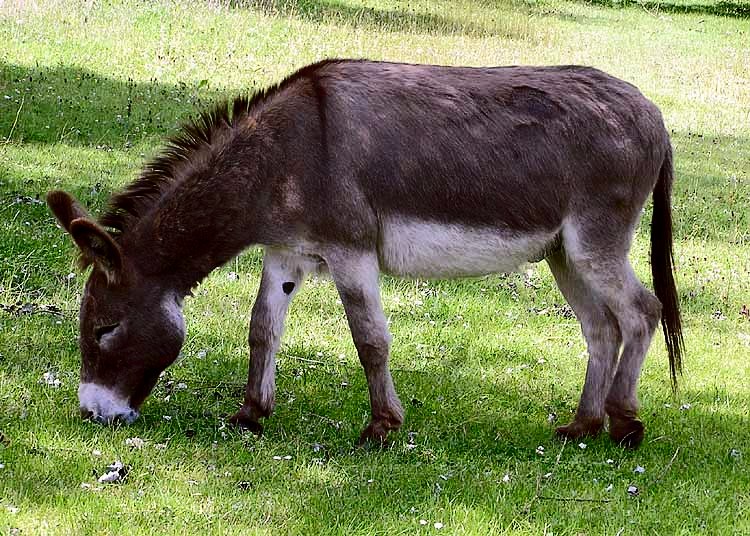
The donkey was domesticated from the African wild ass in northeast Africa and has carried loads and pulled carts for thousands of years. Donkeys are hardy, sure-footed and long-lived, and they are also kept as companions and as guardians for sheep. They are adapted to dry country and need different care from horses.
About
Subspecies of mammal (donkey as a domesticated subspecies); beast of burden, similar to a horse, but smaller.
- Family
- Equidae
Keeping
How it is kept
Kept for
- Draught work
- Guarding
- Companionship
- Temperament
- Calm, cautious and strongly bonded to companions
- Mature weight
- 150–300 kg
- Lifespan
- 25–35 years
- Gestation
- 365 days
- Forage
- Adapted to sparse, fibrous food, so most of their diet should be barley straw and hay with limited grazing. Rich grass quickly makes them overweight.
- Housing
- A dry shelter is essential, because a donkey's coat is not waterproof. Add safe fencing and a hard, dry standing area.
- Good to know
- Donkeys should always be kept with another donkey. They hide pain and illness more than horses do, so small changes in behaviour matter. Feet need trimming every six to ten weeks.
Photos, videos and notes
From keepers
Known as
Names around the world
- en
- donkey, ass, burro
Full detailsevery field on the record, to copy
- Name
- Donkey
- Slug
- donkey
- Kingdom
- Animalia
- Family
- Equidae
- Genus
- Equus
- Species
- asinus
- Wikidata QID
- Q19707
- Container suitable
- No
- Indoor suitable
- No
- OSSI pledged
- No
- Hazard level
- 1
- Data completeness
- 48
Generated sections & citations
summarywikidata