Dionaea muscipula
About
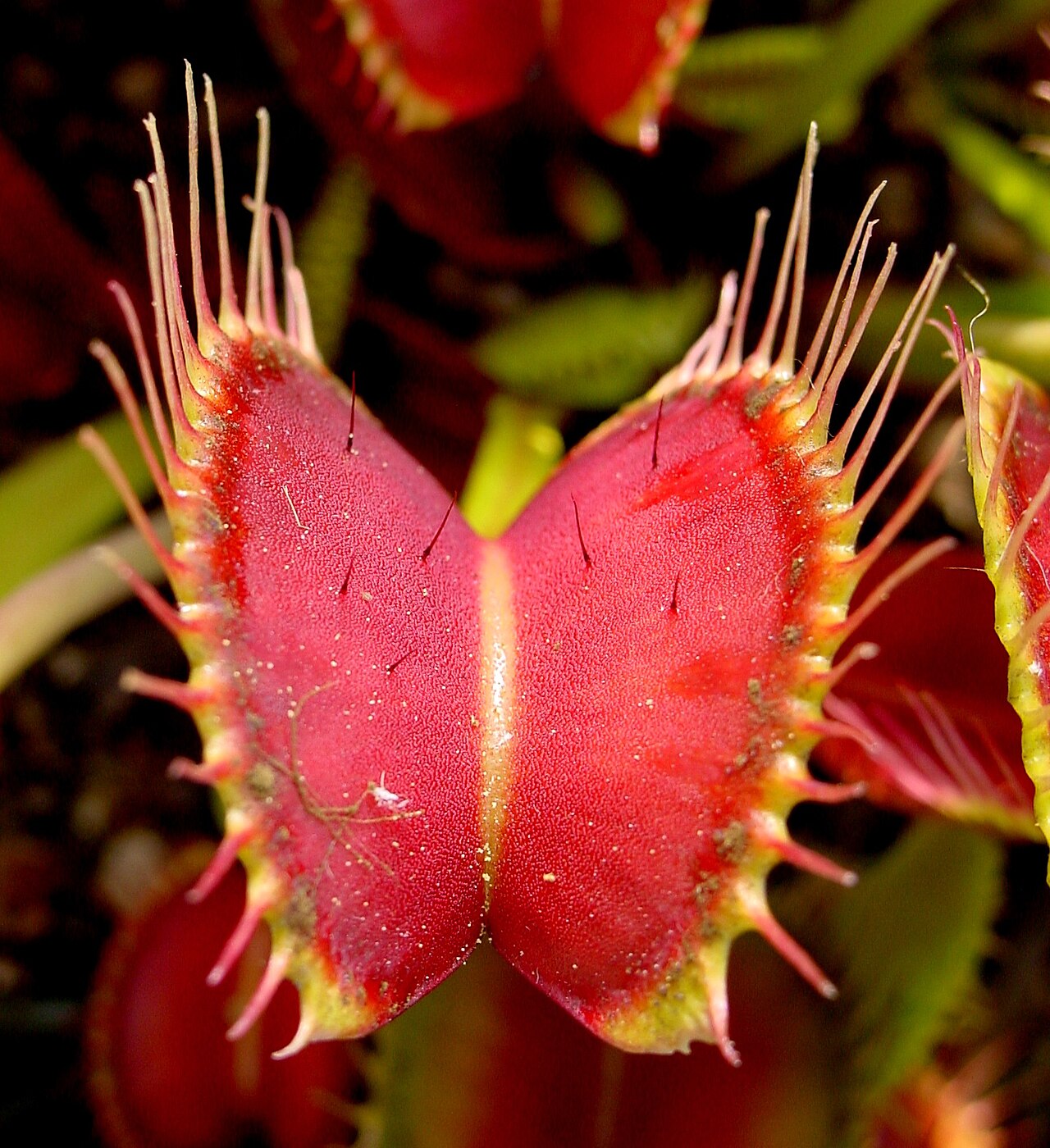
The Venus flytrap is a carnivorous plant native to the temperate and subtropical wetlands of North Carolina and South Carolina, on the East Coast of the United States. Although various modern hybrids have been created in cultivation, D. muscipula is the only species of the monotypic genus Dionaea. It is closely related to the waterwheel plant and the cosmopolitan sundews (Drosera), all of which belong to the family Droseraceae. Dionaea catches its prey—chiefly insects and arachnids—with a "jaw"-like clamping structure, which is formed by the terminal portion of each of the plant's leaves; when an insect makes contact with the open leaves, vibrations from the prey's movements ultimately trigger the "jaws" to shut via tiny hairs on their inner surfaces. Additionally, when an insect or spider touches one of these hairs, the trap prepares to close, only fully enclosing the prey if a second hair is contacted within (approximately) twenty seconds of the first contact. Triggers may occur as quickly as 1⁄10 of a second from initial contact.
- Family
- Droseraceae
Ecology
How it lives
- Propagated by
- Seed
Full detailsevery field on the record, to copy
- Name
- Dionaea muscipula
- Slug
- dionaea-muscipula
- Kingdom
- Plantae
- Family
- Droseraceae
- Genus
- Dionaea
- Species
- muscipula
- Wikidata QID
- Q155825
- Propagule type
- seed
- Container suitable
- No
- Indoor suitable
- No
- OSSI pledged
- No
- Hazard level
- 1
- Data completeness
- 43
Generated sections & citations
summarywikipedia
fun_facts_kidsllm_openai · confidence 0.80
- wikipedia (description.summary) — https://en.wikipedia.org/wiki/Venus_flytrap
fun_facts_adultllm_openai · confidence 0.80
- wikipedia (description.summary) — https://en.wikipedia.org/wiki/Venus_flytrap