Dianthus barbatus
About
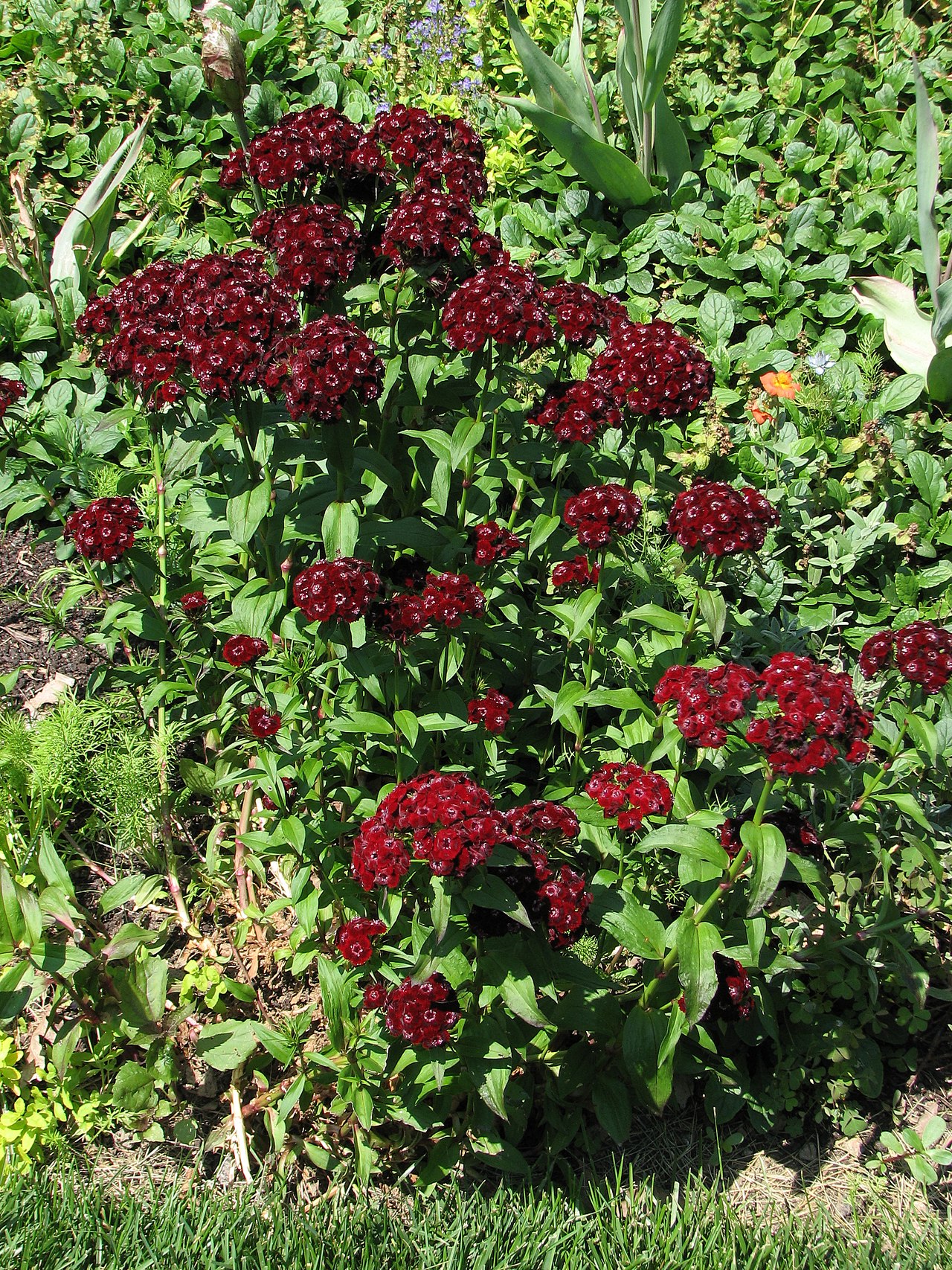
Dianthus barbatus, the sweet William, is a species of flowering plant in the family Caryophyllaceae, native to southern Europe and parts of Asia. It has become a popular ornamental garden plant. It is a herbaceous biennial or short-lived perennial plant growing to 13–92 cm tall, with flowers in a dense cluster of up to 30 at the top of the stems. Each flower is 2–3 cm diameter with five petals displaying serrated edges. Wild plants produce red flowers with a white base, but colours in cultivars range from white, pink, red, and purple to variegated patterns. The exact origin of its English common name is unknown but first appears in 1596 in botanist John Gerard's garden catalogue. The flowers are edible and may have medicinal properties. Sweet William attracts bees, birds, and butterflies.
- Family
- Caryophyllaceae
How to use it
Sweet William is a fantastic addition to your garden as it attracts beneficial insects like bees, birds, and butterflies. This makes it not only a beautiful ornamental plant but also an important part of supporting local ecosystems. Consider planting it in clusters to maximize its appeal to pollinators.
Sources: en.wikipedia.org
Gardening tip
When planting Sweet William, make sure to space them about 12 to 18 inches apart to allow for their growth. They thrive in well-drained soil and full sun, so choose a sunny spot in your garden for the best results.
Sources: en.wikipedia.org
In the kitchen
The flowers of Sweet William are edible, which means you can add a splash of color to your salads or desserts! They can be used to decorate cakes or as a garnish for drinks. Just remember to wash them thoroughly before using, and enjoy their beauty and flavor in your culinary creations!
Sources: en.wikipedia.org
Ecology
How it lives
- Propagated by
- Seed
Full detailsevery field on the record, to copy
- Name
- Dianthus barbatus
- Slug
- dianthus-barbatus
- Kingdom
- Plantae
- Family
- Caryophyllaceae
- Genus
- Dianthus
- Species
- barbatus
- Wikidata QID
- Q161745
- Propagule type
- seed
- Container suitable
- No
- Indoor suitable
- No
- OSSI pledged
- No
- Hazard level
- 1
- Data completeness
- 43
Generated sections & citations
summarywikipedia
fun_facts_kidsllm_openai · confidence 0.90
- wikipedia (description.summary) — https://en.wikipedia.org/wiki/Dianthus_barbatus
fun_facts_adultllm_openai · confidence 0.90
- wikipedia (description.summary) — https://en.wikipedia.org/wiki/Dianthus_barbatus
cookingllm_openai · confidence 0.90
- wikipedia (description.summary) — https://en.wikipedia.org/wiki/Dianthus_barbatus
how_to_usellm_openai · confidence 0.90
- wikipedia (description.summary) — https://en.wikipedia.org/wiki/Dianthus_barbatus
gardening_tipllm_openai · confidence 0.90
- wikipedia (description.summary) — https://en.wikipedia.org/wiki/Dianthus_barbatus