Cunila origanoides
About
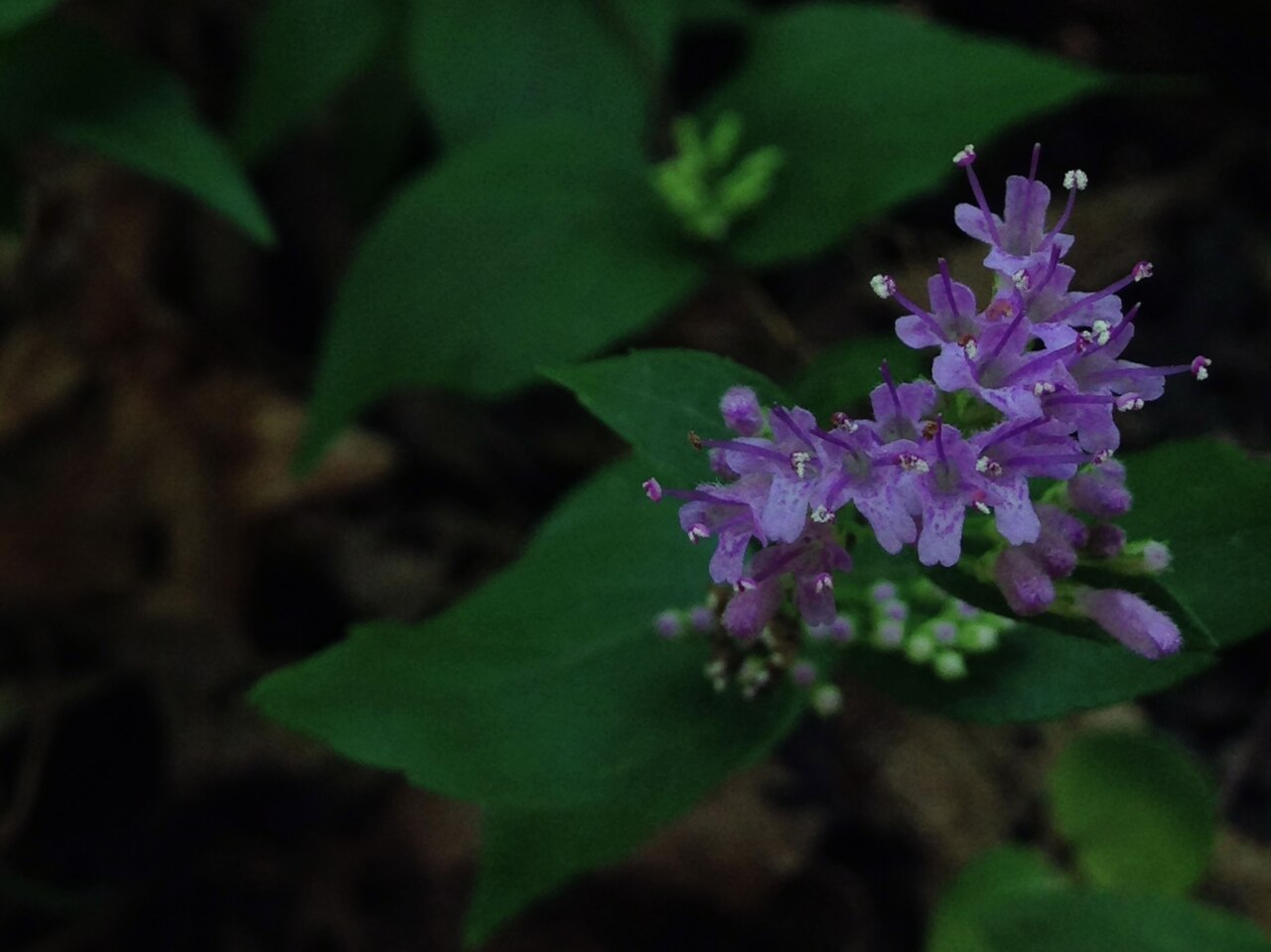
Cunila origanoides, with the common names stone mint, frost mint, dittany, and American dittany, is a perennial late-summer-flowering subshrub with small purple flowers that is native to the central and eastern United States. It belongs to the mint family (Lamiaceae) and is the only species in the genus Cunila native to the United States. It grows in habitats such as dry forests and the thin soil around rock outcrops. This species has historically been cultivated for use as a medicinal herb, tea, and ornamental plant.
- Family
- Lamiaceae
How to use it
This plant has been historically cultivated for its medicinal properties, making it a valuable addition to herbal gardens. It can also serve as an ornamental plant due to its attractive purple flowers, enhancing the beauty of landscapes and gardens.
Sources: en.wikipedia.org
Gardening tip
When planting stone mint, ensure it has well-drained soil, as it thrives in dry conditions. This will help it flourish and produce those lovely purple flowers in late summer.
Sources: en.wikipedia.org
Ecology
How it lives
- Propagated by
- Seed
Full detailsevery field on the record, to copy
- Name
- Cunila origanoides
- Slug
- cunila-origanoides
- Kingdom
- Plantae
- Family
- Lamiaceae
- Genus
- Cunila
- Species
- origanoides
- Wikidata QID
- Q5194277
- Propagule type
- seed
- Container suitable
- No
- Indoor suitable
- No
- OSSI pledged
- No
- Hazard level
- 1
- Data completeness
- 43
Generated sections & citations
summarywikipedia
fun_facts_kidsllm_openai · confidence 0.80
- wikipedia (description.summary) — https://en.wikipedia.org/wiki/Cunila_origanoides
fun_facts_adultllm_openai · confidence 0.80
- wikipedia (description.summary) — https://en.wikipedia.org/wiki/Cunila_origanoides
how_to_usellm_openai · confidence 0.80
- wikipedia (description.summary) — https://en.wikipedia.org/wiki/Cunila_origanoides
gardening_tipllm_openai · confidence 0.80
- wikipedia (description.summary) — https://en.wikipedia.org/wiki/Cunila_origanoides