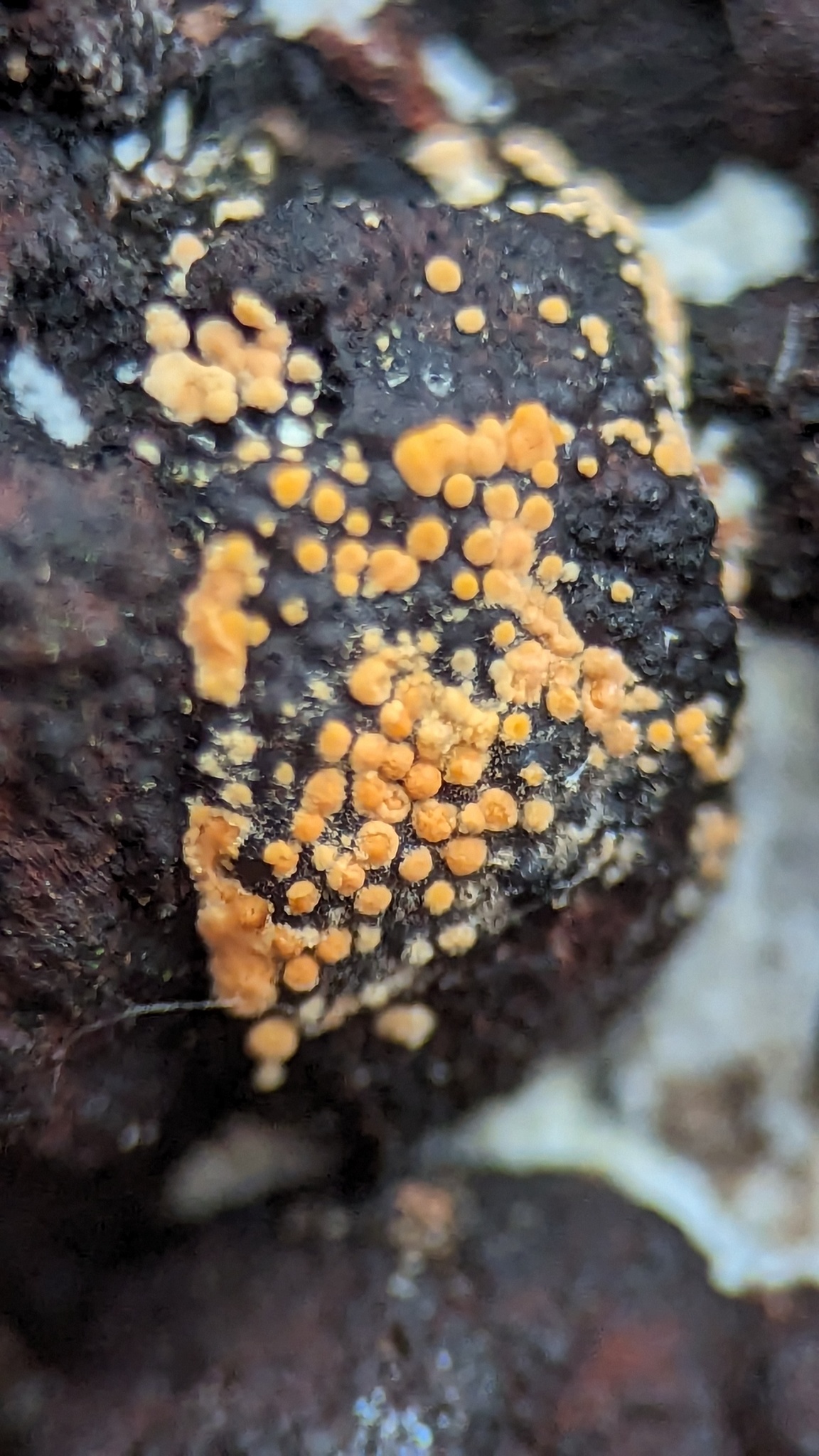
Clonostachys rosea
Foraging: Never eat a wild mushroom on a photo or an app’s word. Many deadly species look like edible ones.
About
Clonostachys rosea f. rosea, also known as Gliocladium roseum and commonly called the rose bracket, is a species of fungus in the family Bionectriaceae. It colonizes living plants as an endophyte, digests material in soil as a saprophyte and is also known as a parasite of other fungi and of nematodes. It produces a wide range of volatile organic compounds which are toxic to organisms including other fungi, bacteria, and insects, and is of interest as a biological pest control agent.
- Family
- Bionectriaceae
How to use it
Clonostachys rosea is valuable in biological pest control due to its ability to produce toxic compounds that can deter other fungi, bacteria, and insects. This makes it an interesting option for organic farming and sustainable agriculture practices.
Sources: en.wikipedia.org
Full detailsevery field on the record, to copy
- Name
- Clonostachys rosea
- Slug
- clonostachys-rosea
- Kingdom
- Fungi
- Family
- Bionectriaceae
- Genus
- Clonostachys
- Species
- rosea
- Wikidata QID
- Q1102315
- Propagule type
- seed
- Container suitable
- No
- Indoor suitable
- No
- OSSI pledged
- No
- Hazard level
- 1
- Data completeness
- 43
Generated sections & citations
summarywikipedia
fun_facts_kidsllm_openai · confidence 0.80
- wikipedia (description.summary) — https://en.wikipedia.org/wiki/Clonostachys_rosea_f._rosea
fun_facts_adultllm_openai · confidence 0.80
- wikipedia (description.summary) — https://en.wikipedia.org/wiki/Clonostachys_rosea_f._rosea
how_to_usellm_openai · confidence 0.80
- wikipedia (description.summary) — https://en.wikipedia.org/wiki/Clonostachys_rosea_f._rosea