Chenopodium quinoa
The story
Long before it became a modern global staple, this plant was integrated into ancient South American agriculture. In the Lake Titicaca basin of Bolivia and Peru, early farmers first utilized it as livestock feed between 5,200 and 7,000 years ago, eventually adopting it for human consumption thousands of years later.
Sources: en.wikipedia.org
- Family
- Amaranthaceae
How to use it
This herbaceous annual plant is cultivated as a highly nutritious crop. Its seeds are utilized globally as a pseudocereal, providing a valuable source of dietary fiber, protein, and essential minerals such as magnesium and potassium.
Sources: en.wikipedia.org
Gardening tip
When planting quinoa, make sure to sow the seeds about 1 inch deep in well-drained soil. This helps them establish strong roots. Quinoa prefers a sunny spot, so choose a location that gets plenty of sunlight throughout the day.
Sources: en.wikipedia.org
In the kitchen
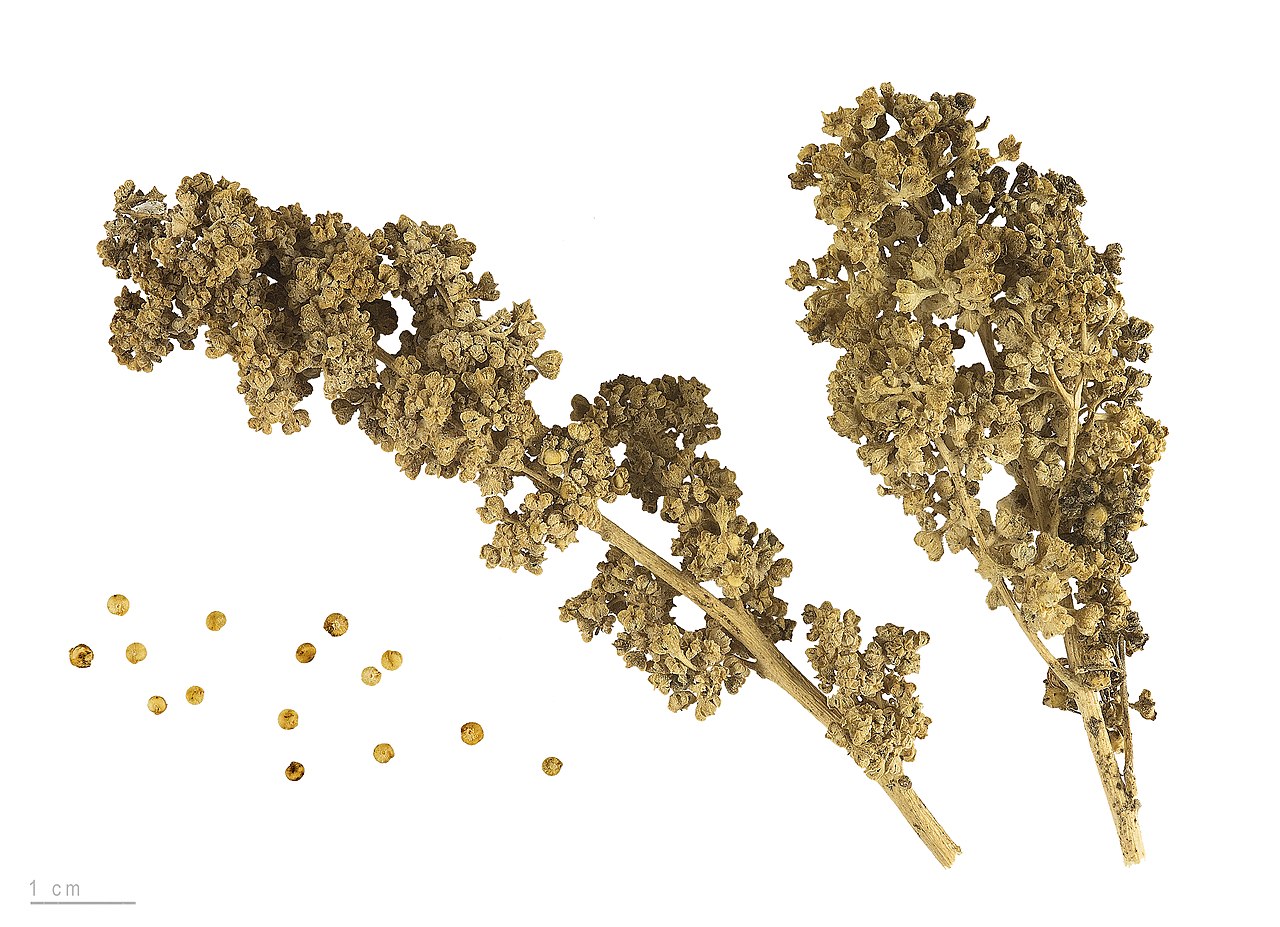
Quinoa is grown primarily for its highly nutritious, edible seeds. These seeds are an excellent addition to meals as they are rich in protein, dietary fiber, B vitamins, and essential minerals like potassium and magnesium, offering higher amounts of these nutrients than many traditional grains.
Sources: en.wikipedia.org
About
Quinoa is a flowering plant in the amaranth family. It is an herbaceous annual plant grown as a crop primarily for its edible seeds; the seeds are high in protein, dietary fiber, B vitamins and dietary minerals especially potassium and magnesium in amounts greater than in many grains. Quinoa is not a grass but rather a pseudocereal botanically related to spinach and amaranth, and originated in the Andean region of northwestern South America. It was first used to feed livestock 5,200–7,000 years ago, and for human consumption 3,000–4,000 years ago in the Lake Titicaca basin of Bolivia and Peru.
Ecology
How it lives
- Propagated by
- Seed
Full detailsevery field on the record, to copy
- Name
- Chenopodium quinoa
- Slug
- chenopodium-quinoa
- Kingdom
- Plantae
- Family
- Amaranthaceae
- Genus
- Chenopodium
- Species
- quinoa
- Propagule type
- seed
- Container suitable
- No
- Indoor suitable
- No
- OSSI pledged
- No
- Hazard level
- 1
- Data completeness
- 40
Generated sections & citations
summarywikipedia
gardening_tipllm_openai · confidence 0.90
- wikipedia (description.summary) — https://en.wikipedia.org/wiki/Quinoa
cookingllm_gemini · confidence 1.00
- wikipedia (description.summary) — https://en.wikipedia.org/wiki/Quinoa
fun_facts_kidsllm_gemini · confidence 1.00
- sprigloom (taxonomy)
- wikipedia (description.summary) — https://en.wikipedia.org/wiki/Quinoa
fun_facts_adultllm_gemini · confidence 1.00
- sprigloom (taxonomy)
- wikipedia (description.summary) — https://en.wikipedia.org/wiki/Quinoa
storyllm_gemini · confidence 1.00
- wikipedia (description.summary) — https://en.wikipedia.org/wiki/Quinoa
how_to_usellm_gemini · confidence 1.00
- wikipedia (description.summary) — https://en.wikipedia.org/wiki/Quinoa