Cassytha pubescens
About
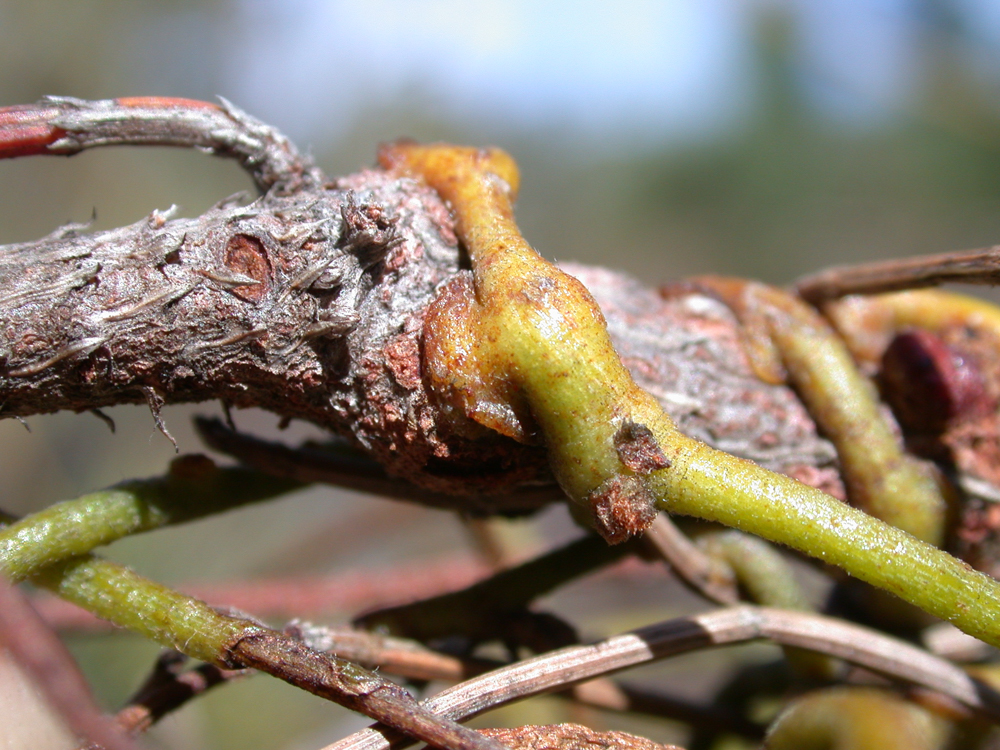
Cassytha pubescens is a native Australian hemiparasitic vine species, in the Laurel family. Common names for the species include devils twine, dodder-laurel, spilled devil's twine, snotty gobble or downy dodder-laurel. It is a widespread and common species in south eastern Australia. The species was first formally described in 1810 by the Scottish botanist Robert Brown in Prodromus Flora Novae Hollandiae et Insulae Van Diemen. Leaves are reduced to scales and photosynthesis is achieved through chlorophyll contained in the plants stems. Stems are between 0.5mm and 1.5mm in diameter and the haustoria are between 2 and 3 mm long.
- Family
- Lauraceae
How to use it
Devils twine can be used in ecological settings as a ground cover or to support other plants due to its climbing nature. However, gardeners should be cautious, as its hemiparasitic behavior can affect the health of host plants.
Sources: en.wikipedia.org
Ecology
How it lives
- Propagated by
- Seed
Full detailsevery field on the record, to copy
- Name
- Cassytha pubescens
- Slug
- cassytha-pubescens
- Kingdom
- Plantae
- Family
- Lauraceae
- Genus
- Cassytha
- Species
- pubescens
- Wikidata QID
- Q5049527
- Propagule type
- seed
- Container suitable
- No
- Indoor suitable
- No
- OSSI pledged
- No
- Hazard level
- 1
- Data completeness
- 43
Generated sections & citations
summarywikipedia
how_to_usellm_openai · confidence 0.80
- wikipedia (description.summary) — https://en.wikipedia.org/wiki/Cassytha_pubescens
fun_facts_kidsllm_openai · confidence 0.80
- wikipedia (description.summary) — https://en.wikipedia.org/wiki/Cassytha_pubescens
fun_facts_adultllm_openai · confidence 0.80
- sprigloom (taxonomy)
- sprigloom (taxonomy)
- wikipedia (description.summary) — https://en.wikipedia.org/wiki/Cassytha_pubescens