Carthamus tinctorius
About
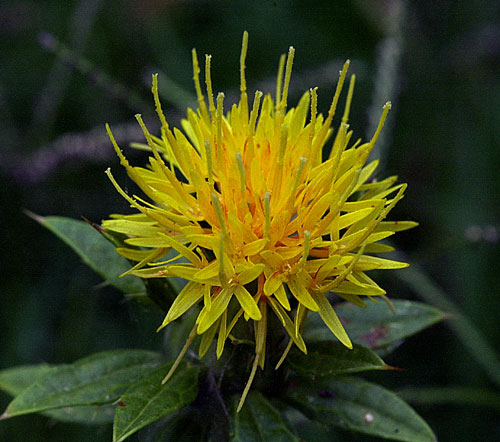
Safflower, also false saffron, is a highly branched, herbaceous, thistle-like annual plant in the family Asteraceae. It is one of the world's oldest crops; today, it is commercially cultivated for vegetable oil extracted from the seeds. Plants are 30 to 150 cm tall with globular flower heads having yellow, orange, or red flowers. Each branch will usually have from one to five flower heads containing 15 to 20 seeds per head. Safflower is native to arid environments having seasonal rain. It grows a deep taproot which enables it to thrive in such environments.
- Family
- Asteraceae
How to use it
Safflower is primarily cultivated for its seeds, which are processed into vegetable oil. Additionally, the vibrant flowers can be used as a natural dye, providing a beautiful color for textiles. This plant is also beneficial for pollinators, making it a great addition to gardens aimed at supporting local wildlife.
Sources: en.wikipedia.org
Ecology
How it lives
- Propagated by
- Seed
Full detailsevery field on the record, to copy
- Name
- Carthamus tinctorius
- Slug
- carthamus-tinctorius
- Kingdom
- Plantae
- Family
- Asteraceae
- Genus
- Carthamus
- Species
- tinctorius
- Wikidata QID
- Q156625
- Propagule type
- seed
- Container suitable
- No
- Indoor suitable
- No
- OSSI pledged
- No
- Hazard level
- 1
- Data completeness
- 43
Generated sections & citations
summarywikipedia
fun_facts_kidsllm_openai · confidence 0.80
- wikipedia (description.summary) — https://en.wikipedia.org/wiki/Safflower
fun_facts_adultllm_openai · confidence 0.80
- wikipedia (description.summary) — https://en.wikipedia.org/wiki/Safflower
how_to_usellm_openai · confidence 0.80
- wikipedia (description.summary) — https://en.wikipedia.org/wiki/Safflower