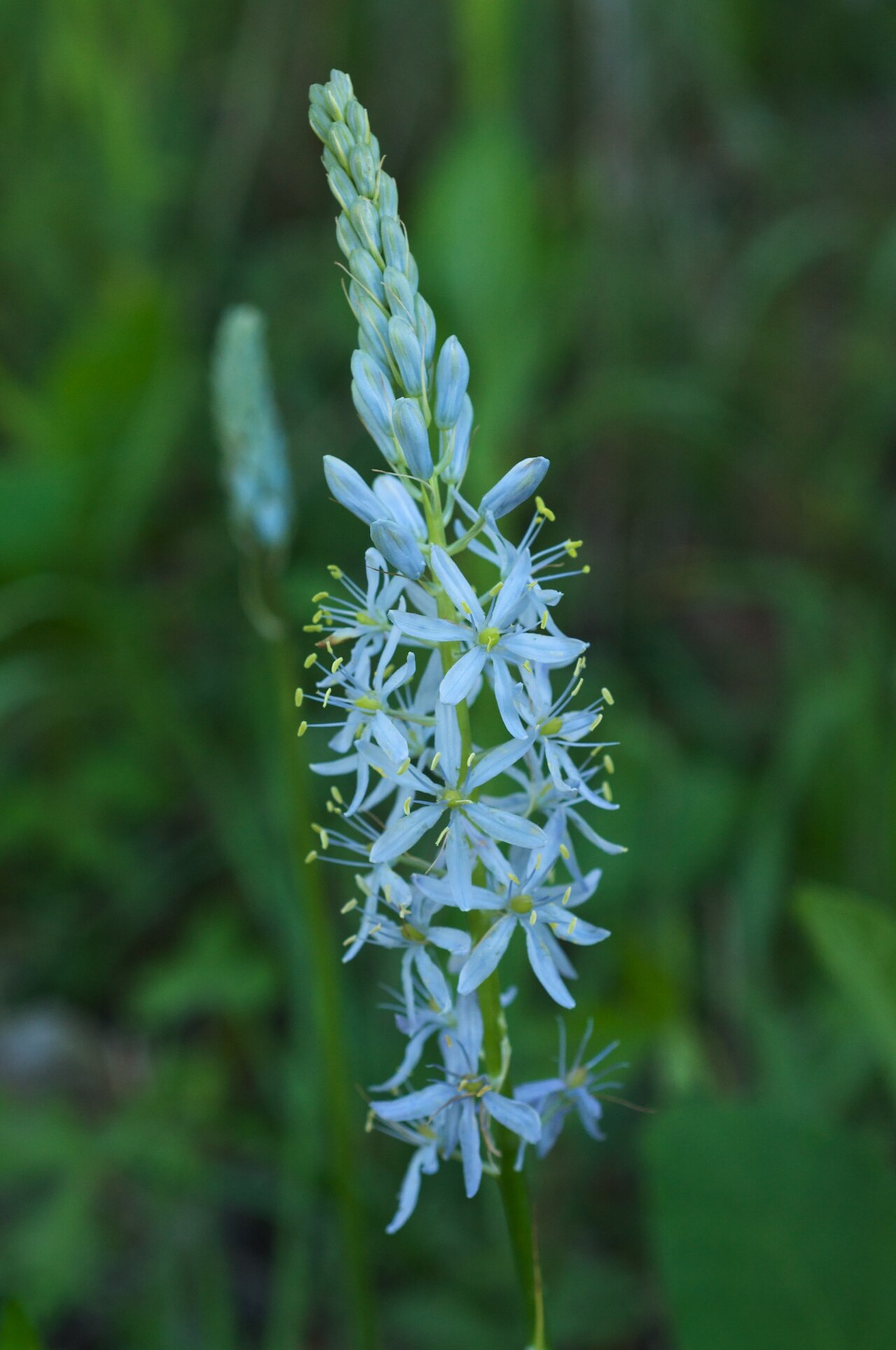
Camassia scilloides
The story
Atlantic camas has deep roots in the culture of Native American tribes, who valued the plant for its nutritious bulbs. They would harvest the bulbs in the spring, often baking them in underground ovens to enhance their sweetness. This practice not only provided sustenance but also fostered a connection to the land, as the plant thrived in the meadows and fields where tribes gathered.
Sources: en.wikipedia.org
- Family
- Asparagaceae
In the kitchen
Atlantic camas bulbs are edible and were historically used by Native Americans as a food source. However, they should be prepared properly before eating. It's important to note that while the bulbs are edible, they are not commonly consumed today, so always ensure you know how to prepare them safely if you decide to try them.
Sources: en.wikipedia.org
About
Camassia scilloides is a perennial herb known commonly as Atlantic camas, wild hyacinth, and eastern camas. It is native to the eastern half of North America, including Ontario and the eastern United States.
Ecology
How it lives
- Propagated by
- Seed
Full detailsevery field on the record, to copy
- Name
- Camassia scilloides
- Slug
- camassia-scilloides
- Kingdom
- Plantae
- Family
- Asparagaceae
- Genus
- Camassia
- Species
- scilloides
- Wikidata QID
- Q5025007
- Propagule type
- seed
- Container suitable
- No
- Indoor suitable
- No
- OSSI pledged
- No
- Hazard level
- 1
- Data completeness
- 43
Generated sections & citations
summarywikipedia
fun_facts_kidsllm_openai · confidence 0.80
- wikidata (common_name)
- wikipedia (description.summary) — https://en.wikipedia.org/wiki/Camassia_scilloides
fun_facts_adultllm_openai · confidence 0.80
- wikipedia (description.summary) — https://en.wikipedia.org/wiki/Camassia_scilloides
cookingllm_openai · confidence 0.80
- wikipedia (description.summary) — https://en.wikipedia.org/wiki/Camassia_scilloides
storyllm_openai · confidence 0.80
- wikipedia (description.summary) — https://en.wikipedia.org/wiki/Camassia_scilloides