Anaheim
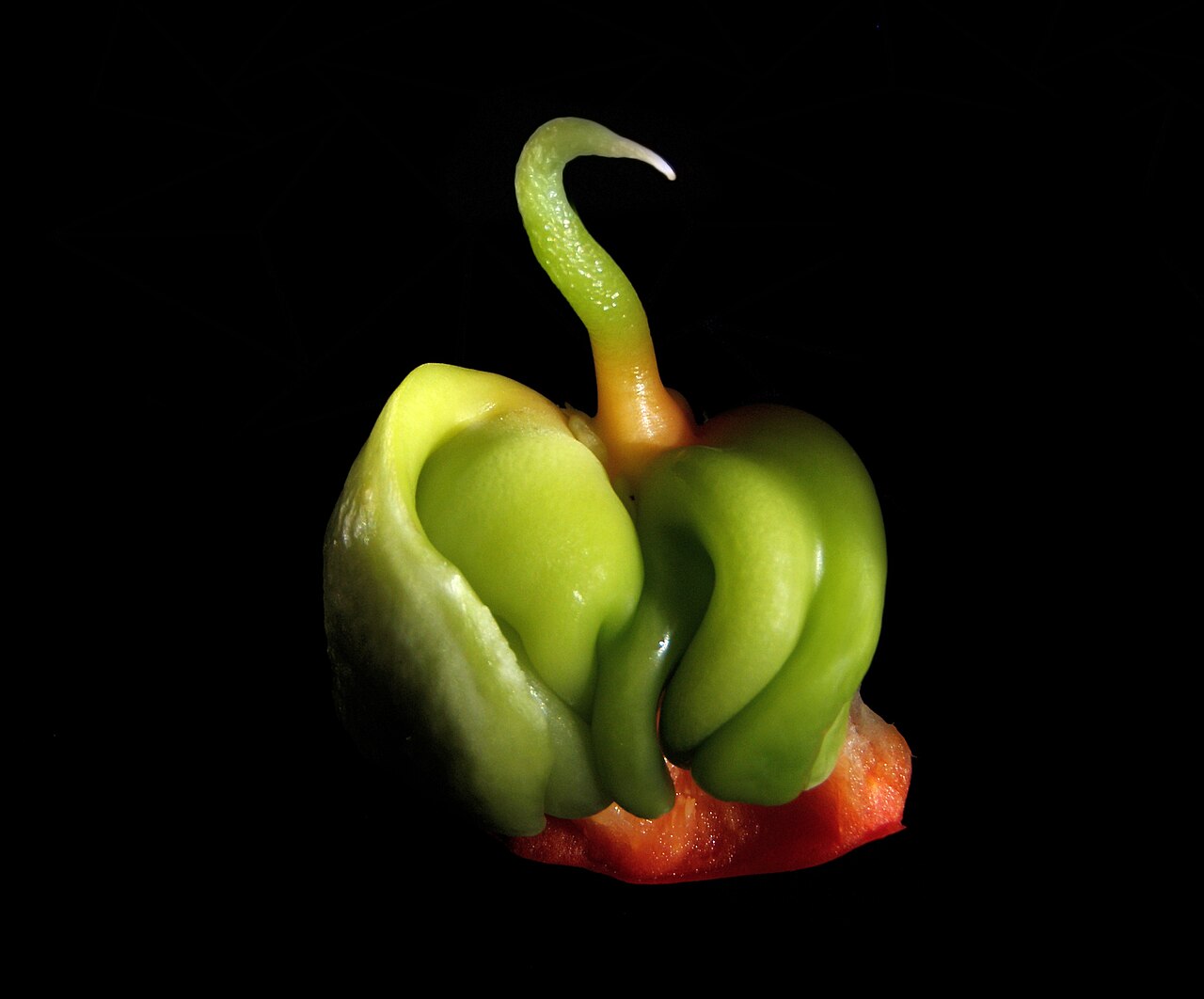
Capsicum annuum
The story
Long before it became a global culinary staple, this plant was domesticated around 6,000 years ago in regions of Mexico, making it one of the oldest cultivated crops known. All of its modern cultivars, from sweet to spicy, are descended from the wild American bird pepper, which can still be found growing in the warmer regions of the Americas.
Sources: en.wikipedia.org, en.wikipedia.org
- Family
- Solanaceae
How to use it
This highly versatile species has a wide range of practical applications. Beyond its extensive global use in culinary dishes, it is utilized in medicine, self-defense, and as an ornamental plant.
Sources: en.wikipedia.org
Gardening tip
If you are looking to grow the Anaheim pepper, keep in mind that this species is suited for outdoor cultivation in USDA hardiness zones 9 to 12.
Sources: Grangery
In the kitchen
This species is widely cultivated for human consumption and includes a vast variety of pepper shapes, sizes, and heat levels, ranging from mild bell peppers to hot jalapeños and cayenne peppers. The plant produces colorful berries in red, green, and yellow that often feature a pungent taste, making them a staple in culinary applications worldwide.
Sources: en.wikipedia.org, en.wikipedia.org
About
Capsicum annuum is a species of the plant genus Capsicum native to southern North America and northern South America. This species is the most common and extensively cultivated of the five domesticated capsicums. The species encompasses a wide variety of shapes and sizes of peppers, both mild and hot, such as bell peppers, jalapeños, and cayenne peppers. Cultivars are descended from the wild American bird pepper still found in warmer regions of the Americas. In the...
At a glance
What it needs
USDA hardiness
Zones 9–12
Ecology
How it lives
- Propagated by
- Seed
Full detailsevery field on the record, to copy
- Name
- Anaheim
- Slug
- anaheim
- Kingdom
- Plantae
- Family
- Solanaceae
- Genus
- Capsicum
- Species
- annuum
- Category
- Pepper
- Hardiness zone (min)
- 9
- Hardiness zone (max)
- 12
- Average height (cm)
- 0
- Propagule type
- seed
- Container suitable
- No
- Indoor suitable
- No
- OSSI pledged
- No
- Hazard level
- 1
- Data completeness
- 52
Generated sections & citations
summaryinaturalist
fun_facts_kidsllm_gemini · confidence 1.00
- sprigloom (common_name)
- inaturalist (description.summary) — https://en.wikipedia.org/wiki/Capsicum annuum
- wikipedia (description.summary) — https://en.wikipedia.org/wiki/Capsicum_annuum
fun_facts_adultllm_gemini · confidence 1.00
- gbif (taxonomy)
- inaturalist (description.summary) — https://en.wikipedia.org/wiki/Capsicum annuum
- wikipedia (description.summary) — https://en.wikipedia.org/wiki/Capsicum_annuum
cookingllm_gemini · confidence 1.00
- inaturalist (description.summary) — https://en.wikipedia.org/wiki/Capsicum annuum
- wikipedia (description.summary) — https://en.wikipedia.org/wiki/Capsicum_annuum
storyllm_gemini · confidence 1.00
- inaturalist (description.summary) — https://en.wikipedia.org/wiki/Capsicum annuum
- wikipedia (description.summary) — https://en.wikipedia.org/wiki/Capsicum_annuum
how_to_usellm_gemini · confidence 1.00
- wikipedia (description.summary) — https://en.wikipedia.org/wiki/Capsicum_annuum
gardening_tipllm_gemini · confidence 1.00
- sprigloom (common_name)
- sprigloom (hardiness)